Jwell Injection Molding Screw for PE, PVC, PP, PC, PA, PET & More
Key Selling Points
- Core plasticizing component for plastic injection molding machines
- Standard three-stage screw structure for broad processing applications
- Barrier-type or separation-type designs available to improve plasticizing capability
- Screw assembly includes a screw head and non-return ring
- Supports PE, PVC, PP, PC, PA and PET processing
Applications Scenarios

Technical Parameter
| Parameter | Specification |
|---|---|
| Machine Application | Plastic injection molding machine |
| Standard Screw Structure | Conventional three-stage screw |
| Optional Screw Structures | Barrier type or separation type |
| Screw Assembly | Screw head and non-return ring |
| Barrel Front-End Assembly | Front body and nozzle |
| Processable Materials | PE, PVC, PP, PC, PA, PET |
Product Description
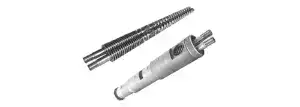
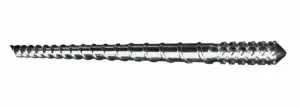
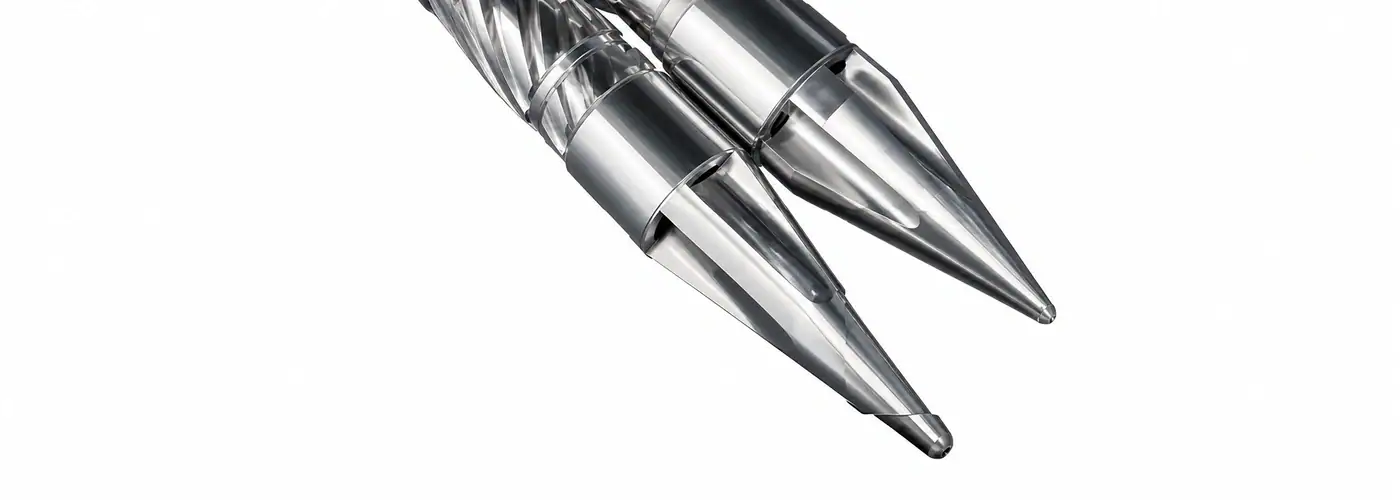
The injection molding screw is a core plasticizing component of a plastic injection molding machine. It transports, compresses, melts and prepares polymer material before injection, making screw configuration an important part of stable molding performance. This JWELL screw solution is intended for the production of a wide range of injection-molded products and is suitable for processing PE, PVC, PP, PC, PA and PET.
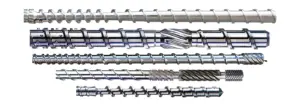
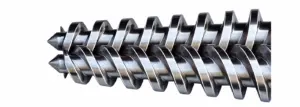
The standard configuration uses a conventional three-stage screw structure, providing a practical design for general injection molding applications. Where higher plasticizing capability is required, the screw can be designed with a barrier-type or separation-type mechanism. These alternatives help adapt the plasticizing section to different resin characteristics and processing requirements without changing the product’s fundamental role in the injection unit. Broad material coverage supports processors working with both common and engineering thermoplastics, while the available screw structures enable closer alignment with the target plasticizing task.
This injection molding screw can be considered for manufacturers processing common thermoplastics across consumer products, packaging, electrical components, automotive parts and other molded applications. Selection should be based on the resin, product requirements and the specifications of the injection molding machine. For projects involving a standard three-stage screw, barrier screw or separation screw, customers can provide the machine model, processed material and existing screw information for technical matching.