When importing plastic extruders from China, the shipping term you agree to FOB or CIF can mean the difference between a smooth, cost-effective transaction and an expensive, stressful one. Yet many buyers sign contracts without fully understanding what these terms mean or how they affect total landed cost, risk exposure, and customs duties. This guide breaks it all down so you can make a confident, informed decision.
What Are Incoterms?
Incoterms (International Commercial Terms) are a globally recognized set of trade rules published by the International Chamber of Commerce (ICC) that define the responsibilities of buyers and sellers in international transactions. They specify who pays for freight, who arranges insurance, and critically at what point the risk of loss or damage transfers from the seller to the buyer.
For buyers importing plastic extruders from China, the most commonly used Incoterms are EXW, FOB, and CIF. Of these, FOB and CIF are by far the most negotiated, and choosing the right one directly impacts your total cost, your legal exposure, and your logistics flexibility. The most recent version, Incoterms 2020, introduced key updates on insurance obligations and is the standard reference today.
What Is FOB (Free On Board)?
FOB means the seller — in this case, Jwell — is responsible for the plastic extruder until it is loaded onto the vessel at the agreed Chinese port of shipment. Once the goods are on board the ship, all risk and responsibility transfers to the buyer.
Under FOB, the seller (Jwell) covers:
- Transportation from the factory to the port of loading
- Export customs clearance and documentation
- Terminal handling and loading charges at the Chinese port
Under FOB, the buyer covers:
- Ocean freight costs
- Marine cargo insurance
- Import customs clearance, duties, and taxes
- Inland delivery at the destination country
The risk transfer point under FOB is the Chinese loading port (e.g., Shanghai, Ningbo, or Qingdao). From that point forward, the cargo is fully the buyer’s responsibility.
What Is CIF (Cost, Insurance & Freight)?
CIF means the seller covers the cost of goods, the ocean freight to the buyer’s destination port, and a minimum level of marine insurance. Responsibility for the goods still technically transfers to the buyer at the port of origin (when loaded), but the seller manages and pays for the journey.
Under CIF, the seller (Jwell) covers:
- Everything included in FOB, PLUS
- Ocean freight to the named destination port
- Minimum marine insurance (ICC Clause C — basic coverage only)
Under CIF, the buyer covers:
- Import customs clearance, duties, and taxes at the destination port
- Inland delivery from the destination port to the final site
CIF is popular among first-time importers because it appears simpler — you receive a single all-in price. However, this apparent simplicity often comes with hidden trade-offs, which we’ll explore below.
FOB vs. CIF: Side-by-Side Comparison
| Factor | FOB | CIF |
| Risk Transfer Point | Chinese loading port | Chinese loading port (buyer pays freight/insurance) |
| Freight Control | Buyer selects carrier | Seller selects carrier |
| Insurance | Buyer arranges full coverage | Seller provides minimum (Clause C) coverage |
| Cost Transparency | High — separate invoices | Low — costs bundled |
| Customs Duty Base | Goods value only | Goods + freight + insurance |
| Best For | Experienced importers | First-time or hands-off buyers |
| Carrier Quality Control | Full buyer control | Seller’s discretion |
Key Differences That Matter for Plastic Extruder Imports
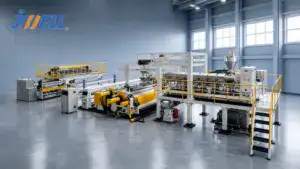
Plastic extruders are not consumer goods — they are heavy, high-value capital equipment. A single twin-screw extruder line can weigh several tonnes and cost tens of thousands to hundreds of thousands of dollars. This makes the choice between FOB and CIF especially consequential.
- Freight costs are substantial. Because extruders require heavy-lift or out-of-gauge shipping, freight costs are significant. Under FOB, you can shop around for the most competitive freight forwarder. Under CIF, the seller books the freight — and may embed a margin in the rate without your knowledge.
- Insurance adequacy is critical. The minimum CIF insurance (ICC Clause C) covers only major casualties like vessel sinking or fire. It does NOT cover theft, rough handling, or water damage — all of which are real risks for precision machinery. Under FOB, you control your insurance policy and can opt for comprehensive ICC Clause A coverage.
- Customs duty calculations differ. In many countries, import duties are assessed on the CIF value of goods — meaning the combined cost of goods, insurance, and freight. If you import under CIF terms, the freight and insurance paid by your seller become part of your dutiable value, resulting in higher import taxes. Under FOB, only the goods value is typically used as the duty base, saving you money at customs.
- ISF filing risk (US importers). US importers must file an Importer Security Filing (ISF) at least 24 hours before cargo is loaded. Under CIF, the seller controls the shipping booking — if they are late to provide vessel details, you could face ISF penalties of $5,000–$10,000 per violation.
Advantages of FOB for Importing Plastic Extruders
For most experienced buyers and repeat importers, FOB is the recommended choice. Here’s why:
- Full transparency: You receive a clean factory price from Jwell and separately negotiate freight with your forwarder — no bundled markups
- Carrier control: You choose your freight forwarder, shipping line, and route — ensuring quality and reliability
- Lower customs duties: Duty is calculated on goods value alone, not inflated by freight and insurance costs
- Better insurance: You purchase the coverage level your extruder actually needs, not the bare minimum
- Faster problem resolution: If there’s a dispute mid-shipment, you deal directly with your own freight agent
- Preferred by professional importers: Global trade experts and freight platforms consistently recommend FOB for machinery imports from China
Advantages of CIF for Importing Plastic Extruders
CIF isn’t without merit — it makes sense in specific situations:
- Low logistics effort: Ideal if you don’t have an established freight forwarder and don’t want to manage the shipping process
- Single point of contact: One invoice, one contact — the seller handles freight booking and basic documentation
- Good for trial orders: If you’re testing a supplier relationship with a smaller or one-off purchase, CIF reduces your operational burden
- Useful when trust is established: If you have a long-standing relationship with Jwell and are confident in our logistics coordination, CIF can be a convenient option
Hidden Risks of CIF You Should Know
Before defaulting to CIF because it seems easier, be aware of these often-overlooked pitfalls:
- Loss of Bill of Lading control: Under CIF, the seller books the shipment, and the consignee on the Bill of Lading may be the seller’s freight agent — not you. This means you could lose direct legal control over your cargo while it’s in transit.
- Carrier quality is not guaranteed: The seller may choose the cheapest available shipping line to protect their margin, which can mean slower transit times, more transshipment stops, and greater risk of damage for heavy machinery.
- Minimum insurance isn’t enough: ICC Clause C insurance is the most basic available and will not adequately protect a high-value extruder line. You’ll likely need to purchase a top-up policy anyway, eliminating one of CIF’s main perceived benefits.
- Inflated pricing: CIF prices are bundled, making it difficult to verify whether freight is priced at market rate or marked up. You lose negotiating leverage on freight costs.
- Higher import duties: As mentioned above, many countries calculate import duties on the CIF value — meaning you pay tariffs on freight and insurance you can’t even verify.
Which Is Better? A Decision Framework
There is no universal right answer — the best choice depends on your experience level, import frequency, and destination country. Use this framework:
Choose FOB if you:
- Have an established freight forwarder or 3PL partner
- Import plastic extruders regularly or in large volumes
- Want full visibility and control over total landed cost
- Are importing to the US, EU, Australia, or other markets with complex customs rules
- Want to minimize your customs duty liability
Choose CIF if you:
- Are a first-time importer without logistics infrastructure in place
- Are placing a small or one-time trial order
- Have a well-established, trusted relationship with your Chinese supplier
- Operate in a country with simpler import clearance procedures
- Prefer a fully managed, hands-off experience
Bottom line: For most buyers importing plastic extruders — especially experienced importers or those purchasing high-value production lines — FOB is the smarter long-term choice. It gives you more control, more transparency, and typically a lower total landed cost.
Other Incoterms Worth Knowing
While FOB and CIF dominate China extruder exports, two other terms are worth a brief mention:
- EXW (Ex Works): The buyer takes responsibility from Jwell’s factory gate — including export customs clearance. This gives maximum control but places the greatest burden on the buyer and is generally not recommended unless you have strong China-side logistics support.
- DAP / DDP (Delivered At Place / Delivered Duty Paid): The seller delivers to your door or site, handling all freight, insurance, and even import duties under DDP. These are less common for large machinery exports from China but may be offered for smaller equipment or turnkey project deliveries.
How Jwell Supports Both FOB and CIF Buyers
At Jwell, we have decades of experience exporting plastic extrusion machinery to customers across more than 100 countries. We understand that every buyer’s logistics situation is different, which is why we offer flexible shipping terms tailored to your needs.
- For FOB buyers, our export team prepares all required shipping documentation — commercial invoice, packing list, bill of lading, certificate of origin, and customs declaration — so your freight forwarder can take over seamlessly once cargo is at port.
- For CIF buyers, we work with trusted international freight forwarders to coordinate shipment booking, cargo insurance, and delivery to your named destination port.
- All extruders are professionally packaged and crated for ocean freight, with moisture-proof and anti-vibration protection suited for precision industrial equipment.
- Our team provides full pre-shipment inspection support and can coordinate third-party inspections upon request.
Whether you’re a first-time buyer or a returning customer, we’re here to make your import process as smooth and cost-effective as possible.
Ready to Import a Plastic Extruder from China?
Understanding FOB and CIF is just one part of a successful import journey. The right Incoterm, combined with a reliable manufacturer, proper documentation, and a trusted freight partner, is the foundation of a smooth transaction.
Jwell has been manufacturing and exporting world-class plastic extrusion machinery for decades. Our export team is ready to guide you through pricing, shipping terms, and logistics — every step of the way.
📩 Contact us today to request a quote under FOB or CIF — whichever works best for your business.
Frequently Asked Questions
Is FOB or CIF cheaper for importing plastic extruders from China? FOB typically results in a lower total landed cost. While the factory price may appear higher than a CIF quote, you gain control over freight — and you avoid paying duties on inflated CIF values.
Does CIF include import duties? No. CIF covers costs to your destination port only. Import duties, taxes, and customs clearance at your country are always the buyer’s responsibility under both FOB and CIF.
Who arranges cargo insurance under FOB? The buyer arranges and pays for cargo insurance under FOB. This is actually an advantage — you can select comprehensive coverage (ICC Clause A) rather than the minimum policy a seller would provide under CIF.
Can I switch from CIF to FOB mid-negotiation? Yes. Incoterms are agreed upon during contract negotiation. If you initially received a CIF quote, you can ask Jwell to reissue an FOB price so you can arrange your own freight.
What ports does Jwell typically ship from? We primarily ship from Shanghai and Ningbo, two of China’s largest and most well-connected container ports, offering frequent sailings to all major global destinations.