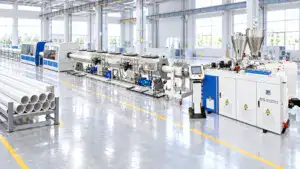
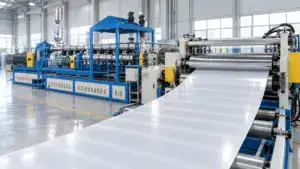
Every year, global buyers overpay or get burned when sourcing plastic extruders from China. Not because Chinese manufacturers are unreliable, but because they didn’t follow the right process. China accounts for nearly 40% of global plastic extrusion equipment production, offering unmatched pricing, variety, and manufacturing capability. This guide gives you a proven, step-by-step process to source safely and cost-effectively.
Step 1: Define Your Requirements First
Before contacting any supplier, lock down your specifications. This prevents wasted time and mismatched quotes.
Key specs to define:
- Extruder type: single screw, twin screw, pipe/sheet/film/profile line
- Screw diameter, output capacity (kg/hr), and L/D ratio
- Raw material type (PVC, PE, PP, etc.)
- Power supply standard for your country (voltage/Hz)
- Budget range and delivery timeline
Pro Tip: Entry-level machines run $60,000–$80,000; mid-range $80,000–$120,000; premium lines $120,000–$180,000+. Know your range before negotiating.
Step 2: Find Reliable Manufacturers
There are four main channels to source Chinese extruder manufacturers:
- B2B Platforms (Alibaba, Made-in-China.com): Good for discovery, but many listings are trading companies, not factories
- Trade Shows (Chinaplas, Canton Fair): Best for live demos and face-to-face vetting
- Direct Manufacturer Websites: Established manufacturers with detailed product pages, certifications, and case studies are usually the safest option
- Industry Associations: The China Plastics Machinery Industry Association (CPMA) maintains directories of vetted manufacturers
Key manufacturing hubs:
| Anhui Province | Full-line plastic extrusion & molding machinery, including pipe, profile, sheet, film, and blow molding lines |
| Region | Specialization |
| Jiangsu Province | Pipe, sheet & film extrusion lines |
| Zhejiang Province | Blow molding, packaging machinery & screw manufacturing |
| Guangdong Province | Injection molding & small extruders |
| Shandong Province | Recycling extrusion equipment |
| Shanghai | High-end, precision extrusion systems |
Step 3: Shortlist and Evaluate Suppliers
Aim for 3–5 shortlisted suppliers. Evaluate each on:
- Years in business (10+ years preferred)
- Export experience to your region
- Complete turnkey line capability
- Client references in your industry
Red flags to avoid:
- No physical factory address or only office photos
- Cannot connect you with an engineer
- Prices far below market average
- Pressure to pay large deposits before any technical discussion
Step 4: Verify Certifications and Credentials
Never skip this step. Key certifications to request:
- ISO 9001:2015 — Quality management system
- CE Certification — Required for European markets and many others
- SGS/Bureau Veritas Reports — Independent third-party factory audits
Always verify certificates directly on the issuing body’s official database — fraudulent certificates do exist. To confirm you’re dealing with a real manufacturer (not a trading company), request a live video factory tour, ask to speak with engineers directly, and check that their business registration scope includes manufacturing.
Step 5: Compare Total Cost of Ownership
The biggest mistake buyers make is comparing only machine prices. Total Cost of Ownership (TCO) over 5 years can vary by 40–60% between suppliers.
TCO includes:
- Machine price + freight + import duties
- Installation and commissioning costs
- Energy consumption over the machine’s life
- Maintenance, wear parts, and spare parts
- Downtime cost per hour if the machine fails
A machine priced $15,000 cheaper upfront can easily cost $40,000 more over five years in energy and spare parts alone. Always request a fully itemized quotation including warranty terms, delivery timeline, and spare parts pricing.
Step 6: Conduct a Factory Audit
For any order above $50,000, audit the factory before paying the balance.
Virtual audit (via Zoom/WeChat):
- Live, real-time tour of the production floor
- Witness a machine at your spec level being tested
- Verify component brands (motors, gearboxes, PLC systems)
On-site audit:
- Inspect machining equipment, quality control lab, and finished goods
- Conduct a Factory Acceptance Test (FAT) — run the machine with your own raw material before shipment
If you cannot travel, hire SGS, Bureau Veritas, or TÜV Rheinland to conduct an independent audit. It typically costs $500–$1,500 and is one of the best investments a first-time buyer can make.
Step 7: Negotiate Terms and Sign a Clear Contract
Never proceed on a purchase order alone. Your contract must include:
- Payment terms: 30% deposit on signing, 70% before shipment — avoid 50%+ upfront demands
- Delivery timeline with penalty clauses for delays
- Warranty period: Minimum 12 months from commissioning, ideally 24 months
- Spare parts availability guaranteed for at least 5–10 years
- FAT protocol: Documented acceptance criteria before final payment
Incoterms to know:
| Incoterm | What It Means |
| EXW | You arrange all shipping from factory gate |
| FOB | Supplier delivers to Chinese port; you handle ocean freight |
| CIF | Supplier arranges shipping to your destination port |
For most buyers, FOB offers the best balance of cost control and simplicity.
Step 8: Manage Shipping and Installation
Before the machine ships:
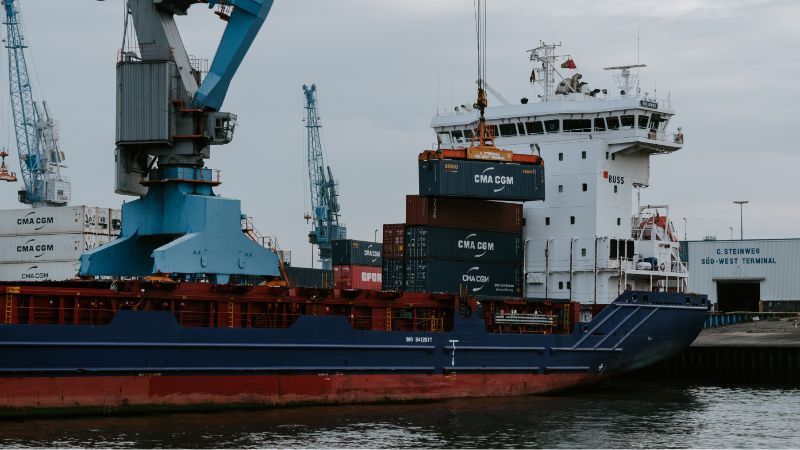
- Work with a freight forwarder experienced in heavy industrial machinery (extruder lines are 5–30+ metric tons)
- Arrange marine cargo insurance (typically 1.1× CIF value)
- Confirm your country’s import duty rate using HS code 8477 for plastic extrusion machinery
- Commission a pre-shipment inspection to verify packaging, serial numbers, and included accessories
Before installation engineers arrive:
- Prepare your factory floor, foundation, power supply, cooling water, and compressed air
- Confirm engineer travel costs, scope of commissioning, and operator training inclusions upfront
Step 9: Prioritize After-Sales Support
After-sales support is the most overlooked factor in the buying decision — and the most impactful on long-term profitability. An unplanned production stoppage can cost $2,000–$10,000+ per day in lost output.
Ask these questions before you buy:
- What is your average response time for technical support?
- How quickly can critical spare parts be shipped internationally?
- Do you have service agents or technicians in my country?
- Does the machine support remote diagnostics (IoT/smart monitoring)?
A good supplier assigns a dedicated after-sales engineer to your account, responds within 24–48 hours, and ships standard spare parts within 72 hours. This level of support is what separates world-class manufacturers from low-cost vendors.
Why Jwell Is a Trusted Choice for Global Buyers
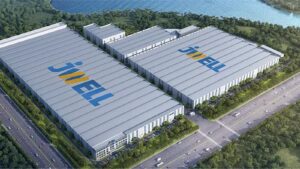
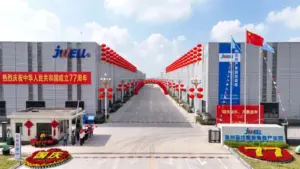
We have spent decades engineering high-performance plastic extrusion lines for customers across Southeast Asia, the Middle East, Africa, Europe, and the Americas. We are not a trading company — we are a full-scale manufacturer with in-house R&D, precision machining, and a dedicated after-sales engineering team.
What sets us apart:
- ISO 9001:2015 certified manufacturing processes
- CE-certified machines for global market compliance
- Complete product range: pipe, sheet, film, profile, compounding, and recycling extrusion lines
- In-house screw and barrel manufacturing for quality control at the component level
- Global installation experience — our engineers have commissioned lines in over 60 countries
- Spare parts guaranteed for 10 years after purchase
- Remote and on-site commissioning support available worldwide
Whether you need a single machine or a complete turnkey production line, our team will work with you from specification to installation and beyond.
👉 [Contact us today for a free technical consultation and customized quote →]
Frequently Asked Questions
Q1: How much does a plastic extruder from China cost?
Prices vary widely based on type and capacity. A basic single screw extruder starts from around $15,000–$30,000, while a complete pipe or sheet extrusion line typically ranges from $60,000 to $200,000+. Always compare total cost of ownership, not just the machine price.
Q2: How do I know if a Chinese extruder manufacturer is legitimate?
Request a live video factory tour, ask to speak with engineers (not just salespeople), verify their ISO/CE certificates through the issuing bodies, and check their business registration documents to confirm their scope includes manufacturing.
Q3: What certifications should a Chinese plastic extruder have?
At minimum, look for ISO 9001:2015 (quality management) and CE certification (especially for European markets). SGS or Bureau Veritas third-party inspection reports are an added layer of assurance.
Q4: Can I visit the factory before buying?
Yes, and we strongly encourage it. Most reputable manufacturers welcome buyer visits. If you cannot travel to China, a live video audit via Zoom or WeChat is a credible alternative.
Q5: What is the typical lead time for a plastic extruder from China?
Standard production lead time is 45–90 days depending on machine complexity and order volume. Shipping transit time adds another 15–40 days depending on your destination port.
Q6: Do Chinese manufacturers provide installation and training?
Yes — most established manufacturers offer on-site installation and operator training, typically at additional cost for engineer travel and accommodation. Some also offer remote video commissioning support.
Q7: What is the minimum order quantity (MOQ) for plastic extruders?
For complete extrusion lines, MOQ is typically 1 unit. Some component and spare parts suppliers may have higher MOQ requirements, but a machine manufacturer will sell individual complete lines.
Q8: What payment terms are standard when buying from China?
The most common structure is 30% deposit upon contract signing with 70% balance paid before shipment via T/T (telegraphic transfer). Letter of Credit (L/C) is also accepted by most established manufacturers and offers additional buyer protection.
Final Thoughts
Sourcing a plastic extruder from China is one of the smartest investments a plastics manufacturer can make — when done correctly. The nine steps in this guide give you a robust framework to protect your investment, avoid common pitfalls, and build a long-term relationship with a supplier who will support your growth for years to come.
The key takeaways: define your specs first, verify everything independently, never compete on price alone, and prioritize after-sales support as heavily as machine quality.
Ready to get started? Contact the Jwell team today for a free technical consultation. Tell us your production requirements and we’ll provide a detailed, no-obligation quote within 24 hours.