This guide breaks down what SDR means, how it affects pressure ratings, and how to pick the right ratio for water mains, gas lines, irrigation systems, and trenchless installations.
We’ll keep the math simple and focus on what matters when you’re actually buying or installing pipe.
What Does SDR (Standard Dimension Ratio) Mean?
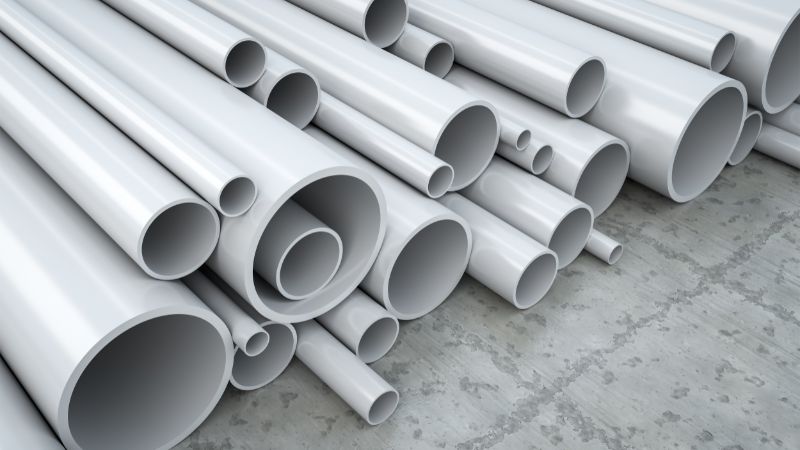
SDR stands for Standard Dimension Ratio. It’s the ratio of a pipe’s outside diameter to its wall thickness. The formula is dead simple:
SDR = Outside Diameter (OD) / Wall Thickness
So if you have a pipe with a 110 mm outside diameter and a 10 mm wall, the SDR is 110 ÷ 10 = 11. That’s SDR11.
Here’s the key thing to remember: higher SDR = thinner walls. SDR32.5 has much thinner walls than SDR9, assuming the same outside diameter. Thinner walls mean less material, lower cost, lighter weight—but also lower pressure capacity. It’s a trade-off, and knowing which SDR to choose depends entirely on your application.
Common SDR values you’ll see in catalogs include 9, 11, 13.5, 17, 21, 26, and 32.5. Manufacturers produce to these standard ratios so fittings, joints, and system components are compatible across suppliers.
Difference Between SDR and DR
You might also come across “DR” (Dimension Ratio). In practical terms, SDR and DR mean the same thing—both express the ratio of diameter to wall thickness. The terminology varies slightly by region and standard, but when you’re selecting pipe, treat them as interchangeable. Just make sure you’re reading the printed marking on the pipe correctly.
How SDR Controls Pressure Rating
Wall thickness directly impacts how much internal pressure a pipe can safely handle. The relationship comes from hoop stress—the stress acting around the pipe’s circumference when it’s pressurized.
The industry uses this formula to calculate maximum operating pressure (MOP):
MOP = 2 × MRS / (C × (SDR − 1))
where:
- MRS = Minimum Required Strength of the material (in MPa)—PE100 has an MRS of 10 MPa, PE80 has 8 MPa
- C = Design coefficient (typically 1.25 for water, accounting for safety margin and long-term creep)
- SDR = the Standard Dimension Ratio
Notice the “(SDR − 1)” in the denominator. As SDR gets bigger, that denominator grows, and MOP drops. Lower SDR means thicker walls and higher allowable pressure.
Worked Example: PE100 Pipe
Let’s calculate MOP for two common SDRs using PE100 material:
SDR11 (PE100):
- MRS = 10 MPa, C = 1.25, SDR = 11
- MOP = (2 × 10) / (1.25 × (11−1)) = 20 / 12.5 = 1.6 MPa (16 bar)
SDR17 (PE100):
- MRS = 10 MPa, C = 1.25, SDR = 17
- MOP = (2 × 10) / (1.25 × (17−1)) = 20 / 20 = 1.0 MPa (10 bar)
So dropping from SDR11 to SDR17 cuts your pressure rating by about 40%. That’s a huge difference, and it shows why you can’t just pick the cheapest (highest SDR) pipe without checking your system’s operating pressure first.
Quick Reference: SDR, Wall Thickness & Pressure
Here’s a snapshot for 110 mm OD pipe in PE100:
| SDR | Wall Thickness (mm) | Approx. MOP (bar) |
| 11 | 10.0 | 16 |
| 13.5 | 8.1 | 12.5 |
| 17 | 6.5 | 10 |
| 21 | 5.2 | 8 |
| 26 | 4.2 | 6.4 |
Note: MOP values assume PE100, MRS = 10 MPa, C = 1.25. Always verify with manufacturer data and local codes.
Material Grade Matters: PE80 vs PE100
The formula above depends heavily on MRS. PE100 material has a higher strength rating than PE80, so for the same SDR, PE100 pipe can handle more pressure. If your project demands high pressure but you want to minimize wall thickness (and cost), PE100 is the smarter choice. On the flip side, for low-pressure applications like drainage or irrigation, PE80 with a higher SDR can be perfectly adequate and more economical.
Reading Pipe Markings
Every quality PE pipe has a print line stamped along its length. You’ll typically see:
- OD and SDR: e.g., “DN110 SDR11”
- Material grade: PE100, PE80
- Pressure class (if applicable): PN16, PN10, etc.
- Manufacturer, production date, and standard references
Always double-check the SDR marking when pipe arrives on site. A mix-up between SDR11 and SDR17 could mean the difference between safe operation and a rupture.
Fittings, Fabrications & System Derating
Here’s something that catches people off guard: fittings and fabricated components (like segmented elbows or tees) don’t always have the same strength as straight pipe. Industry practice often applies a derating factor—commonly around 0.8—to account for welds, geometry changes, and stress concentrations.
In practical terms, you might need to specify fittings one SDR class thicker than your pipe to maintain system integrity. Always consult fitting manufacturer data and apply the appropriate derating factor.
Trenchless Installation: Why SDR Matters for Pulling
The pipe has to withstand significant tensile loads during the pull, and thicker walls provide more cross-sectional area to resist those forces. For long pulls or tight bend radii, engineers typically specify lower SDR (thicker pipe) to ensure the line doesn’t yield or neck down during installation.
A quick calculation using cross-sectional area and material tensile strength will tell you the allowable tensile load (ATL), and that number sets limits on pull length and force.
Common Applications & Recommended SDRs
- Potable water mains (municipal): SDR11 or SDR17, depending on operating pressure and local regulations. SDR11 (PN16) is very common for higher-pressure distribution.
- Gas distribution: Typically SDR11 for safety margin and regulatory compliance. Gas codes often mandate lower SDR for higher consequence-of-failure scenarios.
- Irrigation & low-pressure drainage: SDR21, SDR26, or even SDR32.5 can be cost-effective when pressure demands are low.
- Industrial process lines: Choose based on internal pressure, temperature, and chemical compatibility—SDR9 or SDR11 for high-pressure steam or chemical services.
Conclusion: Picking the Right SDR
Choosing SDR comes down to balancing three things: required pressure capacity, installation method, and cost. Start by calculating or looking up the MOP you need, then select the SDR and material grade (PE80 or PE100) that meets it with an appropriate safety margin.
If you’re doing trenchless work, favor lower SDR for better pull strength. And always verify fitting compatibility and apply any necessary derating factors to keep the whole system rated for your operating conditions.
Need Help Sizing Pipe For a Specific Project?
Jwell offers robust, high‑output PE/HDPE pipe extrusion lines (single‑ and twin‑screw, solid‑wall, corrugated, steel‑wire reinforced, RTP and specialty lines) with wide capacity ranges, modular dies/screw designs, and factory customization to match SDR, material grade (PE80/PE100) and installation method.
Ready to size a line for your SDR and MOP needs? Request a tailored quote and technical datasheet from Jwell now.
FAQs
Q: Is SDR the same as pressure class?
No. SDR is a geometric ratio. Pressure class (like PN10, PN16) depends on SDR plus material strength and design factors. You need both pieces of information to specify a pipe correctly.
Q: How do I convert SDR to wall thickness?
Divide the outside diameter by the SDR. For example, 110 mm OD pipe at SDR17 has a wall thickness of 110 ÷ 17 ≈ 6.5 mm.
Q: Can I save money by going to a higher SDR?
Yes—higher SDR uses less material and costs less per meter. But only if your operating pressure allows it. Don’t sacrifice safety or longevity for a few dollars per meter.
Q: Does temperature affect SDR performance?
The SDR itself doesn’t change, but elevated temperatures reduce material strength (MRS) and therefore lower the allowable MOP. Design codes include temperature derating factors—check them if your pipe will run hot.