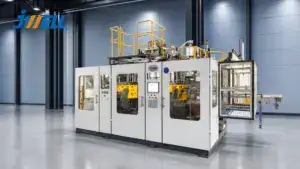
Unplanned downtime from a clogged die or a worn screw can halt your extrusion line and drive up costs. This concise guide gives practical daily checks, die split & clean steps, purging tips, and winter shutdown actions to keep film, sheet, profile and pipe production running smoothly.
Key Extrusion Components to Maintain
The feed system (hopper, feed throat, material handling) must stay clean—contamination here ruins everything downstream.
The screw and barrel melt, mix, and pump polymer. Wear causes inconsistent melt temperature, reduced output, and quality defects.
The die shapes your product. Buildup on flow surfaces causes streaks, gels, and surface defects requiring periodic deep cleaning.
Temperature control (heater bands, thermocouples, cooling systems) prevents degradation, color shifts, and dimensional problems.
Drive systems (gearboxes, motors, couplings, bearings) rarely get attention until failure—usually at the worst time.
Daily Shift Checks: Catch Problems Early
A quick walk-around at shift start prevents major issues.
Visual inspection checklist:
- Check the hopper for contamination, moisture, or bridging
- Look for material leaks around the feed throat and barrel seals
- Inspect die lips for buildup or damage
- Check for oil or grease leaks around the gearbox and hydraulic systems
- Verify cooling water flow (you should see flow at chill roll outlets)
Listen to your machine. Operators who know their equipment can hear when something’s off—a grinding noise from the gearbox, cavitation in a pump, or rattling in the screw. Unusual sounds deserve immediate investigation.
Monitor your instruments:
- Verify all zone temperatures are at setpoint
- Check motor amps and compare to normal baseline (higher amps can indicate screw wear or material issues)
- Confirm line speed is stable
- Look for alarms or fault codes on your control panel
If you spot abnormal temps, high motor load, or material degradation, address it immediately. Don’t wait until the end of the shift—small problems compound fast in extrusion.
Preventive Maintenance Schedule
| Weekly Tasks (40+ operating hours) |
|
| Monthly Tasks |
|
| Annual or 4,000-5,000 Hour Tasks |
|
Die Maintenance: The Full Split & Clean Process
Your extrusion die is the last thing your melt touches before it becomes product, so its condition directly controls surface quality. Over time, polymer buildup, degraded material, and contamination accumulate in flow channels and on die lips. The result? Streaks, gels, die lines, and off-spec product.
When to Clean Your Die
Watch for these quality signals:
- Visible streaks or lines in the film, sheet, or profile
- Rough surface finish (orange peel texture)
- Gel specks or carbon contamination
- Uneven wall thickness or width
Even if you don’t see defects yet, plan a deep clean every 3,000 to 5,000 hours of operation, or at least annually.
Required Tools
- Hoist or overhead lift (dies are heavy)
- Jack bolts for separating halves
- Brass or copper scrapers (never steel—it scratches flow surfaces)
- Die cleaning compound and copper gauze pads
- Anti-seize compound
- Torque wrench
- Heat-resistant gloves and protective covers
- Infrared thermometer
Safety note: Dies hold residual heat for a long time. Even after shutting down heaters, internal metal can stay dangerously hot. Verify surface temperature with an infrared thermometer before touching anything.
Step-by-Step Die Cleaning Procedure
- Loosen bolts while online and hot (back off 1-2 turns)
- Shut down and purge until discharge is clean; cool to ~150°F (65°C)
- Remove bolts and separate halves using jack bolts evenly
- Protect die lips immediately with cardboard or caps
- Scrape and clean all flow surfaces with brass scrapers, die soap, and copper gauze; inspect for nicks
- Clean sealing surfaces and replace worn gaskets/o-rings
- Blow out passages with compressed air
- Reassemble with anti-seize; follow torque sequence in stages (30%, 60%, 100%)
- Re-set die lip gaps with feeler gauges
- Start up gradually; run scrap until stable
A proper die clean takes 3-6 hours and delivers immediate quality improvement.
Purging and Changeover Best Practices
Poor purging wastes material, extends downtime, and contaminates the next run.
Before purging, clean auxiliaries: vacuum hopper, wipe feed throat, blow out material lines.
Purging Process:
- Remove screens from screen pack (if applicable)
- Increase barrel temps 10-20°F if purge compound recommends it
- Introduce purge compound through feed throat; run until discharge is clean
- Open die gaps wide or remove restrictor plates for maximum flow
- Purge die/adapter separately if needed
- Reinstall screens, reset temps, introduce new resin; run until in-spec
Pro tip: Keep quick-connect fittings on auxiliary equipment for fast changeovers.
Temperature Control and Material Residence
Precise temperature control prevents degradation. Even 10°F variance causes defects.
- Calibrate sensors annually—thermocouples drift over time
- Verify heater operation by checking amp draw on each zone
- Monitor melt temp stability with pyrometer or melt sampling
- Match throughput to screw design—too slow increases residence time; too fast causes incomplete melting
Lubrication, Gearboxes, and Bearings
Mechanical failures shut you down for days and cost tens of thousands.
- Follow gearbox lubrication schedule: oil change every 2,000-5,000 hours; inspect for metal particles
- Don’t over-grease bearings—excess grease generates heat and attracts contamination
- Listen for unusual noise or vibration—early warnings save gearboxes
- Check coupling alignment annually with dial indicator or laser tool
Cooling Systems and Descaling
Cooling determines final dimensions and crystallinity.
- Descale cooling circuits every 6-12 months if you have hard water
- Drain water lines before freezing weather; blow out with compressed air
- Add propylene glycol antifreeze if you can’t drain completely
- Test water quality to choose right additives (inhibitors, biocides, pH adjusters)
Electrical Cabinet Maintenance
- Clean cabinets annually: blow out dust, vacuum debris (power off first)
- Check terminal tightness—vibration loosens connections
- Inspect inverters, PLCs, contactors for overheating signs
- Keep digital log of setpoints, recipes, and alarm history
Troubleshooting Common Extrusion Defects
Let’s close with a quick reference for operators. If you see these problems, here’s where to look first.
Streaks or die lines in film/sheet:
- Likely cause: Die buildup or lip damage
- Immediate action: Inspect die lips, clean if possible online, or schedule a split and clean
Orange peel or rough surface:
- Likely cause: Melt temperature too low, uneven die temp, or moisture in resin
- Immediate action: Verify all zones at setpoint, check material dryness
Gels or black specks:
- Likely cause: Degraded material in dead spots, worn screw, or contamination
- Immediate action: Purge thoroughly; if it persists, inspect screw and barrel for wear or damage
Dimensional variation (thickness, width):
- Likely cause: Cooling water flow or temperature fluctuation, line speed variation
- Immediate action: Check chill roll water flow and temperature, verify haul-off speed stability
Melt fracture or shark skin:
- Likely cause: Shear rate too high (throughput too high for die design) or melt temp too low
- Immediate action: Reduce line speed or increase melt temp
If defects persist after these checks, escalate to your process engineer or equipment vendor. Some problems—like screw wear or die design mismatches—require engineering intervention.
Record-Keeping and Operator Training
- Keep maintenance logs recording when, who, what was done, and findings. Patterns reveal wear trends and optimize scheduling.
- Train operators on die cleaning, purging technique, safe lifting, lockout/tagout, and early warning signs.
Winter Shutdown Checklist
- Drain all water lines completely—blow out with compressed air to prevent freeze damage
- Remove material from screw and barrel—run purge compound until clean
- Coat exposed metal with anti-rust oil; cover equipment
- Disconnect and lock out power; tag all disconnects
- Secure electrical cabinet against condensation with desiccant or heater
Upgrade Your Plastic Extrusion with Jwell
With a dedicated R&D team and comprehensive technical support, Jwell ensures your machinery operates at peak performance, minimizing downtime and maximizing output. Contact Us today and explore our solutions to future-proof your extrusion processes.