
The right material is key to a successful extruded product. It defines strength, lifespan, and cost. But with so many plastics to choose from, how do you know which is best?
This guide provides a clear path forward. We’ll explain the most common materials used in plastic extrusion and help you understand which one best fits your project’s needs.
7 Materials Used for Plastic Extrusion: A-Z Guide
This is your reference guide to the workhorses of the plastic extrusion industry. To find a specific material, use this quick-jump menu or scroll down to explore your options.
| Material | Cost | Flexibility | Impact Strength | Temp. Resistance | Clarity |
| ABS | Medium | Low | High | Medium | Opaque |
| Acrylic (PMMA) | Med-High | Low | Medium | Medium | Excellent |
| Polycarbonate (PC) | High | Low | Excellent | High | Excellent |
| PE (Polyethylene) | Low | High | Med-High | Low | Low |
| PP (Polypropylene) | Low | Med | Medium | Med-High | Low |
| PVC (Polyvinyl Chloride) | Low | Varies | High | Medium | Varies |
| TPE/TPV | Med-High | Excellent | Medium | Med-High | Varies |
ABS (Acrylonitrile Butadiene Styrene)
- Overview: A versatile, strong, and stable engineering thermoplastic known for its tough, glossy finish and excellent impact resistance. It’s a go-to material for applications that need to be both durable and look good.
- Key Properties:
- High Impact Strength
- Excellent Dimensional Stability (doesn’t warp or shrink easily)
- Good Chemical Resistance
- Glossy, Smooth Surface Finish
- Common Applications: Automotive interior trim, electronic enclosures, pipes and fittings, and housings for consumer appliances.
Acrylic (PMMA)
- Overview: Often used as a lightweight, shatter-resistant alternative to glass, acrylic is prized for its exceptional optical clarity, UV stability, and scratch resistance. If your product needs to be clear and durable, acrylic is a top contender.
- Key Properties:
- High Clarity & Excellent Light Transmission
- Outstanding Weatherability & UV Resistance (won’t yellow in the sun)
- Good Scratch Resistance
- Rigid & Strong
- Common Applications: Lenses, outdoor light fixtures, signage, medical devices, and clear viewing tubes.
Polycarbonate (PC)
- Overview: When you need ultimate toughness, you need polycarbonate. This high-performance thermoplastic is virtually unbreakable, offering superior impact strength and a high-temperature resistance that sets it apart.
- Key Properties:
- Superior Impact Strength (250 times stronger than glass)
- High-Temperature Resistance
- Excellent Clarity
- Good Dimensional Stability
- Common Applications: Safety glasses and visors, machine guards, medical tubing, electronic components, and architectural glazing.
Polyethylene (PE)
Overview: As the most-used plastic in the world, polyethylene is a versatile and cost-effective champion. It comes in several densities, offering a huge range of properties from soft and flexible to hard and rigid.
Sub-types:
- HDPE (High-Density Polyethylene): A strong, corrosion-resistant material with a high strength-to-density ratio. It’s used for chemical pipes, wire insulation, and weather stripping.
- LDPE (Low-Density Polyethylene): A very flexible, tough material with great moisture resistance. It’s perfect for flexible tubing, packaging films, and squeeze bottles.
- UHMW (Ultra-High Molecular Weight Polyethylene): An extremely dense and tough variant with exceptional abrasion and wear resistance. It’s used for wear strips, guide rails, and other high-impact components.
Polypropylene (PP)
Overview: Polypropylene offers a fantastic balance of physical, chemical, and thermal properties in a lightweight and cost-effective package. It’s particularly noted for its excellent chemical resistance.
Key Properties:
- Excellent Chemical Resistance (especially to acids and bases)
- Lightweight
- Good Fatigue Resistance (making it great for living hinges)
- Higher Temperature Resistance than PE
Common Applications: Automotive parts, fluid delivery tubes, packaging, and medical components.
PVC (Polyvinyl Chloride)
- Overview: A durable and incredibly versatile material that can be formulated to be either rigid and strong or soft and flexible. Its low cost and excellent durability make it a popular choice for countless applications.
- Sub-types:
- Rigid PVC: Offers high hardness, durability, and chemical resistance. It’s the standard for window profiles, pipes, siding, and electrical conduit.
- Flexible PVC: A soft, pliable material with good weather resistance. It’s used for medical tubing, wire insulation, door seals, and gaskets.
Thermoplastic Elastomers (TPEs/TPVs)
- Overview: This unique class of materials acts like rubber but is processed with the ease of plastic. If you need a soft, flexible, rubbery feel for your product, a TPE is likely the answer.
- Key Properties:
- Rubber-like Flexibility & Softness
- Excellent Grip (perfect for soft-touch overmolding)
- Good Temperature & Chemical Resistance (especially TPVs)
- Easily Colorable
- Common Applications: Automotive seals, weather stripping, flexible grips on tools, tubing, and soft-touch features on consumer electronics.
How to Choose the Right Plastic Extrusion Material
Feeling overwhelmed? Don’t be. You can narrow down your options quickly by answering four simple questions.
Step 1: Define the Application’s Environment
- Will it be outdoors? If the product will be exposed to sunlight, you need a material with good UV resistance like Acrylic or specially formulated PVC.
- What is the operating temperature? For high-heat environments, Polycarbonate or PP are better choices than standard PE. For extreme heat, you may need a specialty material like CPVC.
- Will it encounter chemicals? If the product will be exposed to acids, bases, or grease, you need a material with high chemical resistance like PP or HDPE.
Step 2: Determine the Mechanical Requirements
- Does it need to be rigid or flexible? This is the clearest choice. For a rigid pipe, you’d choose Rigid PVC. For a soft, squeezable seal, you’d choose a TPE.
- Does it need to withstand impact? For safety guards or protective housings, the superior impact strength of Polycarbonate or ABS is critical.
- Is weight a factor? For automotive or aerospace applications, a lightweight material like PP or PE can be a significant advantage.
Step 3: Consider Regulatory & Aesthetic Needs
- Does it need to be certified? For medical or food-contact applications, materials must be FDA or NSF certified. For electronics, UL flame ratings may be required. Always mention this to your manufacturing partner.
- What does it need to look like? If you need perfect optical clarity, Acrylic and Polycarbonate are top choices. If you need a high-gloss, colored finish, ABS is an excellent option.
Step 4: Balance Performance with Budget
- Cost is always a factor. Commodity materials like PE and PP are generally the most cost-effective. Engineering thermoplastics like ABS and PC carry a higher price tag but offer significantly higher performance. Be open with your partner about your budget so they can help you find the best value.
Can’t Find the Perfect Match? The Power of Custom Solutions
What if no off-the-shelf material checks all your boxes? That’s where custom compounding comes in.
Materials can be thought of as base recipes that can be enhanced with additives to achieve very specific properties. This is one of the most powerful tools in plastic extrusion. By working with an expert partner (Contact Us), you can create a custom blend perfectly tailored to your application.
Common additives include:
- UV Stabilizers: To protect products from sun damage.
- Plasticizers: To increase flexibility and softness.
- Flame Retardants: To meet safety standards for electronics.
- Colorants: To achieve a precise brand color.
- Reinforcing Agents: Such as glass or carbon fibers to dramatically increase strength and stiffness.
Jwell – Your Partner in Plastic Extrusion
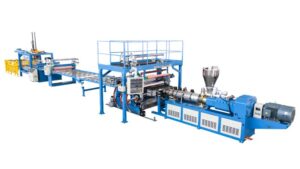
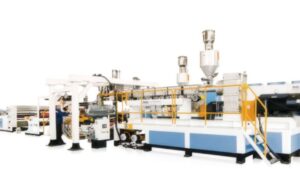
Choosing the right material is the first step, and having a reliable partner right behind you makes the whole process smoother. At Jwell, we specialize in custom‑built plastic extrusion lines for a wide array of materials—PVC, PP, PE, ABS, PC, engineering plastics, and many more. With dozens of successful projects across construction, automotive, packaging, home‑appliance, and medical sectors, our engineers know how to balance performance, cost, and production speed.
Whether you need a small‑scale sheet line or a high‑capacity pipe line, we work closely with you to select the optimal material, design the best extrusion solution, and keep the factory running efficiently. Ready to get started? Contact us today for a free consultation or a no‑obligation quote.;
Frequently Asked Questions
What is the most common material for plastic extrusion?
Polyethylene (PE) and Polyvinyl Chloride (PVC) are two of the most widely used materials due to their versatility, low cost, and wide range of available properties.
Which plastic is best for outdoor use?
Acrylic (PMMA) is a top choice due to its outstanding UV resistance and weatherability. Specially formulated PVC with UV stabilizers is also an excellent and widely used option for outdoor applications like window frames and siding.
What is the difference between TPE and TPV?
Both are flexible, rubber-like materials. TPV (Thermoplastic Vulcanizate) is a specific type of TPE that has undergone a vulcanization process, giving it superior heat resistance, chemical resistance, and compression set (its ability to return to its original shape after being compressed).
Can you mix different types of plastic for extrusion?
Generally, no. Most plastics are not compatible with each other and mixing them results in a weak, unreliable final product. However, custom compounding involves creating specific polymer alloys and blends in a controlled way to achieve desired properties.
How does cost vary between different plastics? Cost varies significantly. Commodity plastics like PE and PP are the most affordable. Engineering plastics like ABS and Acrylic are in the mid-range. High-performance plastics like Polycarbonate and TPVs are the most expensive but are chosen for applications where their unique properties are essential.