
Most extrusion issues come from interactions between material properties, equipment setup, and process conditions. Small changes in temperature, pressure, or feed rate can create defects that appear later in production.
This guide introduces how to diagnose common defects, understand which process variables affect your output, and identify root causes in your materials, equipment, or line design.
Diagnosing Common Extrusion Defects
To find defects, don’t just treat surface symptoms. Instead, see how material behavior, process conditions, and equipment design work together. Most defects point to specific imbalances in temperature, pressure, or material flow that you can trace and correct.
Wall Thickness Inconsistency and Dimensional Drift
Thickness variation shows up as uneven walls or parts that drift outside dimensional tolerances. This usually happens because melt temperature is uneven across the die, or cooling rates are inconsistent. Check your die design first. Flow imbalances create thick and thin spots that repeat in predictable patterns. Temperature gradients in the barrel also cause material to flow unevenly.
Common causes:
- Unbalanced die temperatures
- Worn or damaged tooling
- Inconsistent line speed
- Poor temperature control in cooling zones
Material properties matter too. If your MFI varies between batches, flow rates change even when settings stay the same. This leads to dimensional drift over time.
Surface Defects: Melt Fracture, Sharkskin, and Roughness
Melt fracture creates spiral patterns or ripples. It occurs from melt velocity above the polymer’s limit.
Sharkskin looks like fine ridges running lengthwise. This defect occurs at the die exit due to excessive surface stress. You can usually fix it by adjusting die temperature or reducing extrusion speed.
A rough surface without clear patterns often points to contamination or inconsistent melt quality. Material degradation from excessive heat creates surface irregularities too.
Bubbles, Burn Marks, and Yellowing
Bubbles indicate trapped moisture or air in your material. You’ll need to check if your resin was stored properly and if your venting system works correctly.
Yellowing and burn marks signal thermal degradation. This happens if material sits too long at high temperatures, or from hot spots in the barrel. Check your residence time and barrel temperature profile.
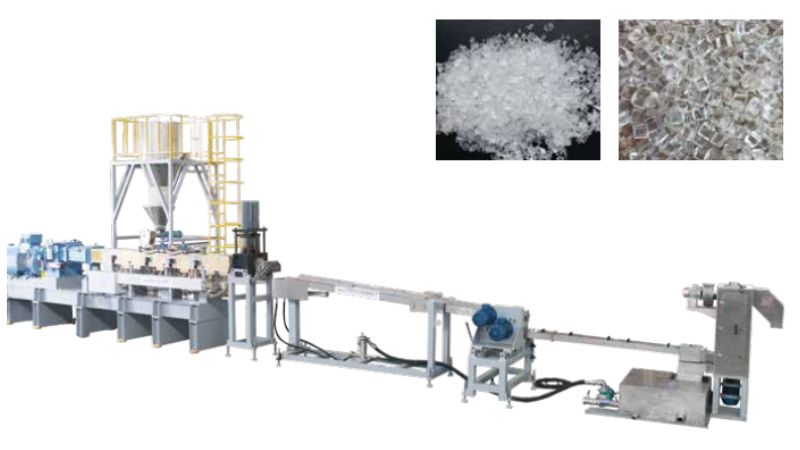
Key indicators:
- Dark specs = degraded material
- Yellow tint = oxidation or overheating
- Clear bubbles= moisture content
Material contamination causes random defects that don’t follow patterns. Clean your equipment thoroughly and verify incoming material quality.
Pressure and Output Instability
Melt pressure fluctuations create downstream quality problems. Pressure surges directly change dimensions and surface quality.
Monitor your pressure gauges during production. Steady pressure means stable flow. Cycling or drifting pressure points to feeding problems, temperature imbalances, or screen pack blockage.
Output surging wastes material and creates scrap. It typically comes from inconsistent feeding, contaminated material, or incorrect screw speed settings relative to your material’s viscosity.
Process Variables and Their Impact
Getting control over your process variables makes the difference between smooth production and constant troubleshooting. Temperature settings, screw operation, cooling balance, and timing all interact. They determine your film quality and process stability.
Barrel Temperature and Melt Temperature Control
Your barrel temperature zones need careful setup to melt your polymer properly without degrading it. Each zone serves a purpose: the feed zone keeps resin flowing, the transition zone melts the material, and the metering zone stabilizes melt temperature.
Most modern extruders use temperature controllers with thermocouples at each barrel zone. You should monitor actual melt temperature at the extruder die, not just barrel setpoints. A melt thermocouple gives you real feedback about what’s happening inside.
When your melt temperature runs too high, you risk polymer degradation and off-spec properties. Too low, and you get poor mixing and unmelted particles.
Screw Speed, rpm, and Back Pressure Effects
Screw rpm directly controls your output rate. It also affects how much mechanical energy enters the melt. Higher screw speed increases throughput but also raises melt temperature from shear heating.
Back pressure influences mixing quality and melt temperature. It develops from die resistance and cooling system drag.
Cooling System and Die Temperature Balancing
Die temperature affects flow distribution across your film width. Uneven die temperatures create gauge variation and thickness bands that show up downstream.
Your cooling system must remove heat symmetrically to prevent warping or dimensional drift.
Residence Time, L/D Ratio, and Line Speed Adjustments
Residence time depends on your extruder’s L/D ratio and line speed. Longer residence time improves mixing but increases the risk of thermal degradation for heat-sensitive materials.
Root Causes: Material, Equipment, and Design Factors
Most extrusion problems trace back to three core areas: the materials you use, how your equipment functions, and how your line is set up.
Raw Material Quality and Contamination
Raw material quality directly affects your final product. Contaminated material creates defects like fisheyes and discoloration in your extruded parts. You should always check incoming resins for foreign particles or degraded polymer before processing.
Moisture is another major issue. If you don’t dry your resin according to manufacturer specs, you’ll see bubbles and surface defects. Store your materials properly to prevent contamination from dust, metal fragments, or mixed polymers.
Screw Design and Wear Patterns
Screw design must match the material you’re processing. Wrong compression ratios or channel depths lead to poor melting and mixing. Screw wear changes how material flows through your extruder. This causes output problems and quality issues.
Check screw regularly for wear patterns on the flight tips and barrel surfaces. Worn screws reduce mixing efficiency and create inconsistent melt temperatures.
Die Alignment and Extrusion Line Setup
Die alignment affects product dimensions and surface quality. When your die isn’t centered properly with the screw axis, you get uneven wall thickness and warped parts.
Your cooling tank must sit parallel to the die exit. Poor alignment creates internal stresses that show up as warping or dimensional drift in your finished product.
Mixing, Material Degradation, and Preventive Maintenance
Good mixing prevents material degradation during processing. High residence times in your extruder cause polymer breakdown and gel formation. Reduce your melt temperatures and residence time to protect material integrity.
Set up a preventive maintenance schedule for your extrusion line. Clean your equipment before production runs and inspect screen packs for degraded material. Regular maintenance stops small problems before they become big production issues.
Proven Solutions and Best Practices
Successful extrusion operations depend on smart process control, targeted troubleshooting methods, and waste reduction strategies.
Real-Time Process Control and Optimization
Monitoring your extrusion process in real time helps you catch problems before they become costly. You should track key variables like temperature, pressure, and screw speed throughout your production run.
Setting up digital sensors at critical points gives you instant feedback. When you spot temperature spikes or pressure drops early, you can make quick adjustments. This approach reduces defects and keeps your output consistent.
Key monitoring points include:
- Die temperature and pressure
- Screw speed and torque
- Feed rate stability
- Melt temperature uniformity
Extrusion Troubleshooting in PVC and Specialty Applications
PVC extrusion requires special attention to processing technology because the material is sensitive to temperature changes. You need to watch for dry blend feeding problems that cause torque fluctuation and poor mixing.
Keep your feed system stable by checking hopper levels regularly and maintaining consistent material flow.
Production Downtime Reduction and Efficiency Gains
Reducing production downtime starts with preventive maintenance. Clean your screens and dies on schedule to avoid unexpected shutdowns.
Track your energy consumption patterns to identify inefficiencies.
Preventing Material Waste and Improving Product Development
Material waste cuts into your profits. Dry your resin according to manufacturer specs to prevent moisture-related defects. Run color purges efficiently between product changes to minimize scrap.
Solve Extrusion Problems at the Source with JWELL Engineering Expertise
Extrusion defects are signals of deeper issues in materials, equipment, or process control. The fastest way to improve product quality and reduce downtime is to work with a partner who understands the full extrusion system. At Jwellanhui, we combine advanced machinery with real-world engineering experience. Together, we’ll find the root cause of your extrusion problems and build solutions that last.
Contact us today for expert consultation, equipment recommendations, or a customized extrusion solution.
Frequently Asked Questions
What are the most common extrusion defects, and how can I recognize them quickly?
Common defects: rough surface, streaks, bubbles, warping, uneven thickness. Check texture by touch and sight to identify flaws fast.
How do I troubleshoot melt fracture, sharkskin, and surface roughness on an extruded product?
For melt fracture, slow down speed and raise die temperature. To fix sharkskin, lower output or change resin. Adjust heating if the surface is rough.
What typically causes die lines, gauge variation, and dimensional instability during extrusion?
Dirty or scratched die leads to line marks. Unsteady flow and speed cause uneven thickness. Irregular cooling results in unstable product size.
How can I trace extrusion problems back to resin/material issues like moisture, contamination, or poor melt strength?
Dry damp raw materials to avoid bubbles. Keep materials clean to prevent spots. Use qualified resin to maintain stable melt strength.
Which process settings (temperature profile, screw speed, back pressure, haul-off) should I adjust first when extrusion quality drops?
Adjust temperature first, then screw speed and haul-off speed. Tune back pressure as the final step.
What engineering changes to the screw, die, or cooling/calibration system can permanently prevent recurring extrusion defects?
Optimize screw structure for better mixing. Redesign die for even material flow. Upgrade cooling devices to steady product dimensions.