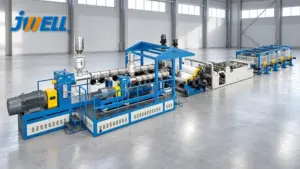
Start a plastic recycling plant by securing a defined feedstock stream, confirming a buyer’s product specification and testing the process needed to connect them. Size equipment around saleable output and finance the complete installed project, including utilities, commissioning and working capital.
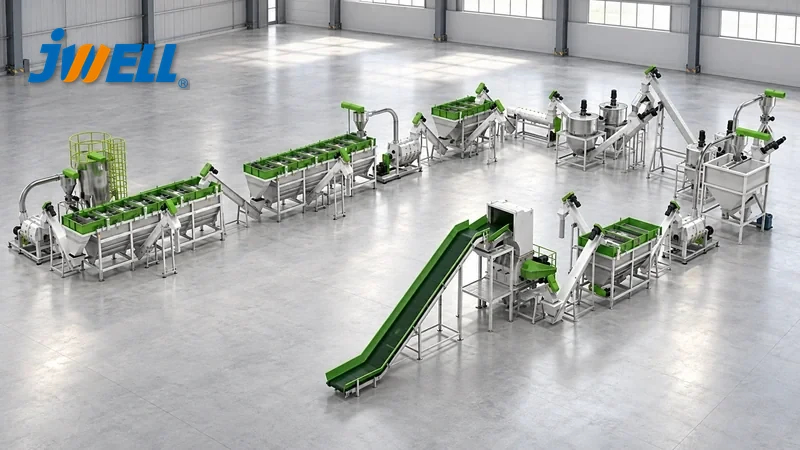
A clean factory-scrap pelletizing operation and a post-consumer washing plant are different businesses. Their sorting, water treatment, drying, labor and quality requirements can differ substantially, even when both advertise the same incoming kilograms per hour.
Define what the plant will buy and sell
Choose a realistic starting product: sorted scrap, washed flakes, regrind, recycled pellets or a controlled compound. Pelletizing is not automatically the best destination for every material. A buyer may prefer clean flakes, while another requires melt filtration and a consistent pellet specification.
Identify the polymer and form of supply. PET bottles, PE film, PP woven bags and rigid HDPE containers need different handling and cleaning strategies. Avoid designing the project around an undefined “mixed plastic” stream with no established separation route.
Speak with potential buyers before specifying machines. Record required polymer purity, color, moisture, particle size, melt-flow or IV range, odor and packaging. Obtain a representative sample approval where practical. A saleable product definition provides the basis for trials and process guarantees.
Characterize feedstock with representative samples
Sample multiple deliveries rather than one unusually clean bale. Record moisture, dirt, labels, metals, other polymers and non-plastic material. Note seasonal variation and the relationship between purchased mass and recoverable polymer.
|
Feedstock characteristic |
Why it changes equipment scope |
|---|---|
|
Loose film or woven bags |
Requires consistent feeding of low-bulk-density material |
|
Heavy soil or food residue |
Increases cleaning, drying and residue treatment duties |
|
Mixed colors or polymers |
May need additional sorting and separate product grades |
|
Metals and abrasive solids |
Affect protection, wear and maintenance |
|
Moisture variation |
Changes effective dry-polymer throughput and energy demand |
|
Odor or printing |
May limit markets despite acceptable pellet appearance |
Establish an incoming acceptance specification and a rejection procedure. Equipment should be designed for a defined variability range, not expected to compensate for unlimited contamination.
<!–WPIMG:0–>
Select the process route
Clean production scrap may need size reduction, metal removal, feeding, extrusion, melt filtration and pelletizing. Washing may be unnecessary if cleanliness and end-use requirements are already controlled.
Post-consumer rigid material commonly requires sorting, grinding, washing, separation and drying before extrusion. Film washing also requires careful attention to entanglement, water removal and feeding stability. The correct sequence depends on the actual waste stream.
For PET bottles, the process normally includes bottle sorting, label and cap separation, size reduction, washing and drying. Specify the washing section against local bottle quality and the buyer’s flake requirements. The JWELL rigid-plastic washing line pictured above is a separate equipment option for suitable rigid-plastic streams; it is not presented here as a PET-specific installation.
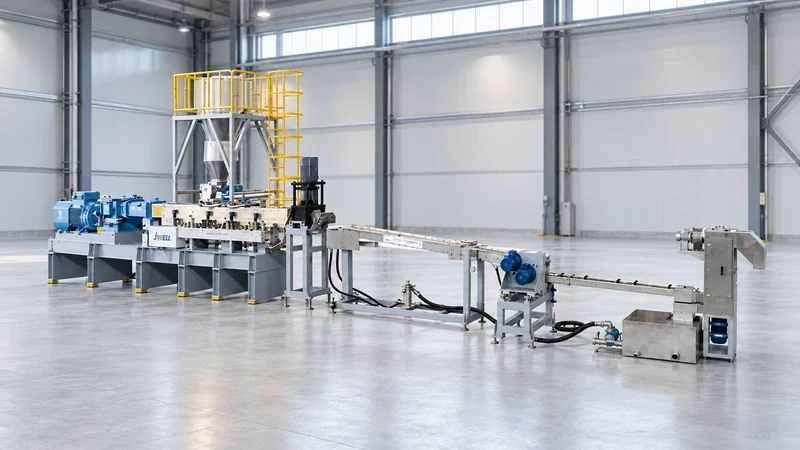
If the customer buys pellets, add extrusion, vacuum, filtration and cutting to the process. JWELL’s PET bottle flakes and powder recycling pelletizing machine handles the downstream melt-processing stage. Balance its dry-feed requirement against the washing line’s actual flake output, moisture and contamination levels.
<!–WPIMG:1–>
Convert incoming capacity into saleable output
Define whether quoted capacity means wet feed, dry polymer, extruder throughput or accepted product. These measures are not interchangeable.
Use:
Monthly saleable mass = average incoming rate while running × scheduled hours × availability × saleable yield.
Assume an average incoming rate of 1,000 kg/h during operation, 16 scheduled hours/day, 25 days/month, 80% availability and 75% saleable yield on incoming mass. The result is 240,000 kg/month. These are planning assumptions. If 1,000 kg/h is only a nameplate rating, apply a measured speed factor as well; availability accounts for stopped time, not reduced speed.
Define yield carefully. Water and contamination reduce the main-product recovery. Record caps, labels, sludge, fines and rejects to reconcile the mass balance; saleable cap or label fractions should be tracked as byproducts with their own revenue and handling costs.
Size connected stages around the same basis. A washer rated for wet bottles and an extruder rated for dry flakes can have matching brochure numbers while remaining poorly balanced in practice.
Include utilities and material flow
Confirm electricity supply, transformer requirements, cooling, compressed air, water source and wastewater treatment. Distinguish recirculating water flow from fresh-water consumption and wastewater discharge. Each affects a different part of the installation.
Plan space for incoming storage, quarantine, sorting, production, maintenance and finished goods. Bale inventory can occupy much more space than the processing machinery. Include forklift routes and safe access in the general arrangement drawing.
Define residue handling and site requirements for the destination before finalizing the layout. Confirm local authorization, fire protection and discharge requirements with the responsible parties using the actual plant scope. A generic equipment list cannot establish site readiness.
Build an investment model from scope items
Avoid relying on a single universal plant price. Request itemized quotations against the agreed process and capacity, then add costs outside the machinery supply.
|
Funding component |
What to include |
|---|---|
|
Process equipment |
Sorting, size reduction, washing, drying, extrusion and cutting as required |
|
Utilities and environmental systems |
Electrical distribution, cooling, water treatment and extraction |
|
Delivery and installation |
Freight, handling, foundations, mechanical and electrical work |
|
Commissioning |
Trial feedstock, training, labor and startup losses |
|
Initial spares |
Wear parts, blades, screens and critical components |
|
Working capital |
Feedstock inventory, payroll, receivables and operating cash |
|
Contingency |
Identified uncertainty in the defined scope |
Build three separate subtotals: equipment supply, installed-site costs and startup cash. For each quotation, record its capacity basis, delivery terms, exclusions and validity date. Assign installation and utility costs to a supplier or local contractor so they are not omitted or counted twice.
Working capital needs its own calculation. Multiply expected daily feedstock purchases by inventory days, add operating cash and customer receivables, then subtract applicable supplier credit. A plant that holds bales for weeks and sells on credit needs more cash than one buying and selling against immediate payment. Set the contingency from unresolved site and supply items rather than applying one percentage to every project.
Test operating economics before purchasing
Calculate feedstock, utilities, labor, consumables, disposal, maintenance and overhead costs per saleable kilogram. Use measured trial data where available and label preliminary allowances clearly.
At an assumed feedstock cost of USD 0.25/kg and 75% saleable yield, feedstock alone costs about USD 0.333 per saleable kilogram. If yield falls to 65%, that becomes approximately USD 0.385/kg. This illustrates why contamination and recovery can outweigh a modest purchase-price discount.
Test the business at lower pellet prices, lower utilization and slower customer payments. Separate contribution margin from fixed costs, depreciation, financing and taxes. Where caps or other separated polymers have a buyer, credit their net revenue after sorting and disposal costs. This gives a more useful view of cash requirements than a payback figure based only on the main pellet price.
Commission against a written acceptance plan
Run representative material and measure incoming mass, saleable output, rejects, moisture, quality and utilities over an agreed period. Collect final product for customer evaluation rather than judging only machine stability.
Document training, maintenance routines, spare-parts lead times and responsibility for interfaces between equipment packages. Define how the process will be reproduced at the buyer’s site and which conditions must be provided for the agreed performance.
FAQ
Is washing always required?
No. Clean, controlled factory scrap may follow a dry route. Post-consumer material often requires cleaning, but the scope depends on contamination and product requirements.
Is pelletizing always more profitable than selling flakes?
No. Compare the price premium with added yield losses, energy, filtration, labor and investment for the specific customer market.
How much investment is required?
The amount depends on feedstock, capacity, product specification, site and supply scope. Build a quoted installed-project budget rather than treating a machine price as total funding.
What should be secured first: feedstock or customers?
Develop both together. The plant needs a dependable input stream and a product that real buyers will accept at an economically workable price.
Purchase a JWELL Plastic Washing and Pelletizing Line
Build your recycling plant around JWELL washing and pelletizing equipment selected for the waste stream you can source. For a PET pellet project, request a PET bottle washing line and a PET flakes recycling pelletizing line; for suitable rigid-plastic scrap, request the corresponding rigid-plastic washing configuration. The equipment offer should connect feed preparation, washing, drying and melt processing at compatible production rates.
Send feedstock samples or analysis, available tonnes per month, the buyer’s flake or pellet specification and target output to JWELL Anhui sales. Ask for an itemized machinery quotation and utility/layout requirements to build your plant procurement budget.