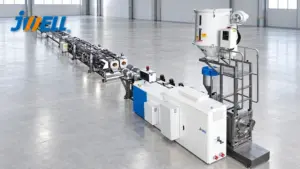
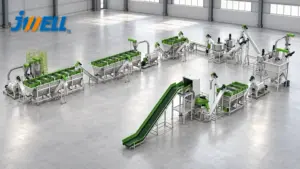
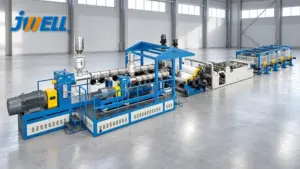
Maintain PET intrinsic viscosity during sheet extrusion by controlling feed moisture, avoiding unnecessary melt temperature and residence time, keeping material handling sealed, and verifying the performance of drying or vacuum devolatilization. Measure the incoming blend and finished sheet with comparable laboratory methods to establish where losses occur.
The objective is a stable IV appropriate for the sheet and thermoforming application. A clear sheet or steady melt pressure does not by itself prove that molecular weight has been preserved.
What intrinsic viscosity tells a sheet producer
Intrinsic viscosity, usually reported in dL/g, is the limiting value of reduced or inherent solution viscosity as polymer concentration approaches zero. Under a specified solvent and temperature, it relates to molecular size. PET producers use it to track incoming resin and molecular-weight changes through extrusion, alongside sheet and forming tests.
IV is not the same as the instantaneous viscosity of the melt inside the extruder. Melt behavior also changes with temperature, shear, additives and formulation. A pressure reduction may therefore indicate several different causes and needs supporting measurements.
Different laboratory methods, solvents or calculation conventions can produce results that require reconciliation. Use one agreed method for feed and sheet comparisons, or demonstrate correlation before combining results from different laboratories.
Establish the incoming material baseline
Measure the actual production feed, not just one supplier certificate. Virgin pellets, purchased flakes, internally generated trim and additives can enter the line with different moisture levels and processing histories.
Build a lot record containing material identity, blend proportions, moisture, IV, color and contamination observations. Separate incoming variation from extrusion losses. If the feed IV falls while the feed-to-sheet difference remains unchanged, the extruder may not be the primary source of the shift.
Use:
Apparent IV change = finished-sheet IV − incoming-feed IV.
A feed measured at 0.76 dL/g and sheet measured at 0.72 dL/g show an apparent loss of 0.04 dL/g. Before adjusting the line, check that the samples represent the same material: allow for transport and melt residence time, and compare results against laboratory repeatability. Set the allowable loss from the forming requirements, rather than adopting this example as a limit.
Avoid treating blend IV as an exact arithmetic average unless the laboratory and formulation basis support that approximation. Representative sampling of the mixed feed provides a stronger production reference.
<!–WPIMG:0–>
Control moisture before the critical melting stage
PET is hygroscopic: moisture can be absorbed within the material, not merely remain on the surface. Moisture can also rise during storage and transport, so the as-packed certificate does not establish the condition at the extruder throat.
During melt processing, moisture can cause hydrolytic chain scission and reduce molecular weight. Effective preparation requires the right combination of material temperature, drying time, air condition and flow, followed by protected transfer.
Follow the specific resin or flake processing guidance. Amorphous PET can soften and agglomerate under an unsuitable drying program; crystallization may be necessary depending on the material and drying system. A single universal temperature is inappropriate for every PET feedstock.
Verify the dryer with measurements rather than setpoints alone. Check drying-air dew point and flow at the hopper, actual material temperature, feed rate and residence-time distribution. A sufficiently hot display does not reveal bypassing, channeling or a leaking regeneration valve.
For a preliminary calculation:
Nominal hold-up mass (kg) = feed rate (kg/h) × selected residence time (h).
At an illustrative 500 kg/h and a supplier-selected four-hour residence, nominal hold-up is 2,000 kg. Usable hopper volume must also account for bulk density and flow behavior. The four-hour assumption is not a universal PET drying requirement.
Keep dried material dry during transfer
Open bins, long conveying routes and humid conveying air can undermine an otherwise effective dryer. Inspect the entire path from storage through blending, drying and the extruder inlet.
Pay particular attention to regrind. Trim may leave the line dry but absorb moisture during intermediate storage. A wet stream blended downstream of the dryer can create IV variation that appears unrelated to dryer performance.
Take moisture samples near the point of use using a validated method and sealed handling procedure. Identify sample location and timing. Match moisture readings to the production interval being investigated; an earlier hopper sample can miss a wet regrind addition or a conveying-system leak.
Reduce excessive thermal and mechanical exposure
Once moisture control is verified, investigate actual melt temperature, residence time and stagnant material. Barrel settings are not melt-temperature measurements. Mechanical work in the screw and viscous dissipation through restrictive flow passages can raise melt temperature; a rising filter pressure drop is a reason to check temperature and screen condition.
Operate within a validated process window rather than lowering every zone indiscriminately. Too little heat can impair melting, raise pressure or produce unstable sheet. The useful target is uniform melting with limited unnecessary thermal exposure.
Inspect adapters, screen changers, melt pumps and dies for areas that retain material. Long residence during low-rate production or interruptions can increase degradation and color problems. Define restart and shutdown procedures for the specific equipment.
Finer filtration may improve particle removal while increasing pressure and changing operating conditions. Evaluate its effect on sheet cleanliness, temperature, IV and reject rate together. A filter cannot reverse polymer-chain degradation that has already occurred.
Evaluate dryer-free extrusion as a complete system
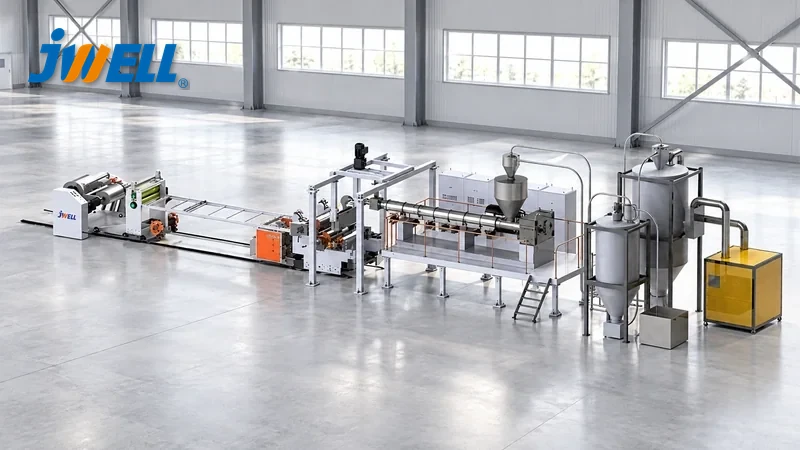
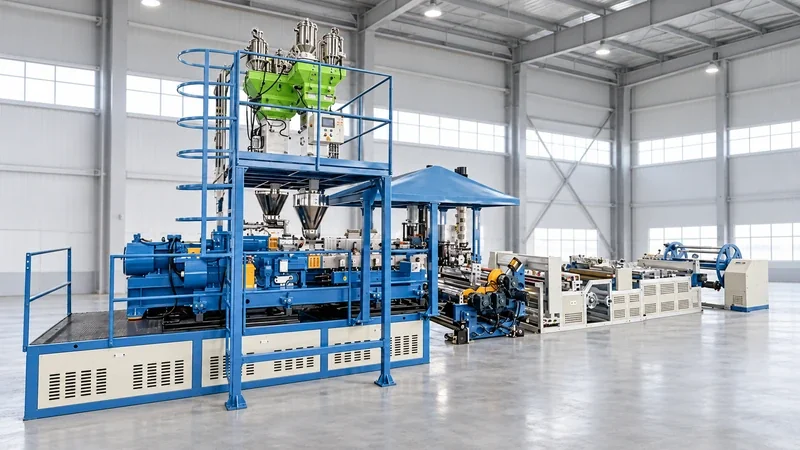
JWELL’s twin-screw dryer-free vented PET/PLA sheet extrusion line uses melt venting to process suitable feed without a separate predrying stage. Its useful operating range depends on the feed moisture, melt-surface renewal, vacuum system and throughput.
Ask for the validated feed-moisture range, vacuum conditions, vent cleaning procedure and output limits on your blend. Effective devolatilization depends on melt exposure, vacuum performance and feed rate. Condensate, contamination and vent flooding can affect operation.
For a purchase trial, measure incoming feed condition and outgoing sheet IV while recording vacuum, throughput and melt temperature. The supplier should demonstrate the claimed operating window with representative material, including the agreed recycled-content level.
<!–WPIMG:1–>
Diagnose IV loss systematically
|
Observation |
Investigate first |
Useful evidence |
|---|---|---|
|
IV falls after a material change |
Feed IV, moisture and contamination |
Retained feed samples and lot records |
|
IV falls as throughput rises |
Drying capacity or vacuum loading |
Point-of-use moisture and vacuum trend |
|
IV falls during slow running |
Melt residence and overheating |
Melt temperature and interruption history |
|
IV varies without obvious appearance change |
Blend consistency and sampling |
Matched feed/sheet laboratory results |
|
Brittle sheet with stable IV |
Formulation, orientation and cooling |
Mechanical and forming tests |
Change one relevant variable at a time and retain matched samples. Simultaneous adjustments to temperature, vacuum and blend ratio make it difficult to identify the effective correction.
IV rebuilding can be integrated into suitably designed melt-processing equipment or carried out in an additional treatment stage. Chain extension, melt-phase polycondensation and solid-state polycondensation are different routes with different process requirements. Specify the intended mechanism and demonstrate the final IV; ordinary venting alone is not evidence that rebuilding occurs.
FAQ
Does bubble-free PET sheet prove adequate moisture control?
No. IV loss can occur without obvious bubbles. Use moisture measurements, laboratory IV and finished-product tests together.
Can vacuum restore IV already lost through degradation?
Some specially designed vacuum melt-processing systems can stabilize or increase IV through polycondensation. An ordinary vacuum vent does not establish that capability. For a JWELL purchase, ask for measured feed-to-sheet IV results on the proposed configuration and your feedstock.
Is the highest possible IV always preferable?
No. Specify an IV range suited to the sheet and forming process, then control it consistently.
How often should IV be checked?
Set sampling frequency according to material variability, process risk and customer requirements. Include material changes, startups and abnormal events in the control plan.
Request a Quote for a JWELL PET Sheet Extrusion Line
For a new PET sheet line or a capacity expansion, consider JWELL’s twin-screw dryer-free vented PET/PLA sheet extrusion line. Request a machine quotation based on your feedstock and required sheet IV, including the feeding, vacuum, filtration, roll-stack and winding equipment needed for production.
Send your virgin/rPET ratio, incoming IV and moisture data, net sheet width, thickness and target kg/h to JWELL Anhui sales. Include the final-sheet IV range and thermoforming requirements so JWELL can propose a production line and material trial for your purchase.