Uneven walls cause weak spots, wasted material, and poor quality products. You can control wall thickness uniformity by managing parison temperature, air pressure timing, stretch rod positioning, and mold design.
You’ll learn practical solutions based on engineering principles and real-world fixes.
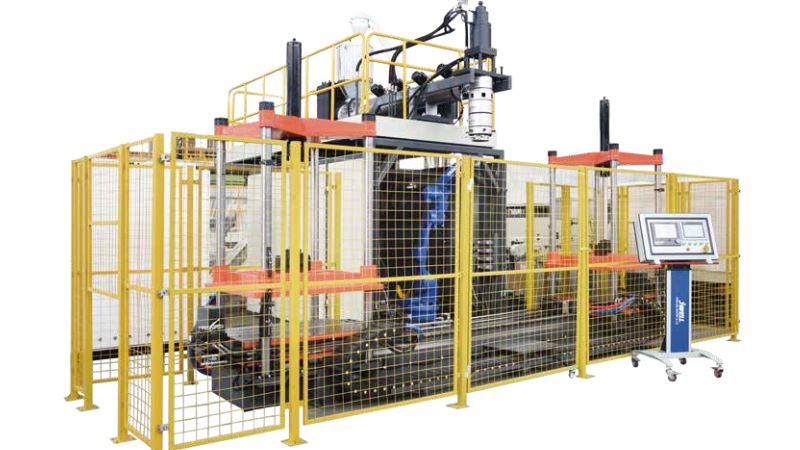
Influences on Wall Thickness Uniformity
Three main factors affect wall thickness uniformity: parison formation, process control, and raw material quality.
Parison Formation and Initial Thickness
Parison is the foundation of wall thickness control. If parison starts with uneven thickness, that variation carries through to the final product. The die gap determines initial parison thickness. Even small inconsistencies create weak spots or heavy sections.
A consistent parison requires steady melt flow and uniform die temperature. Hot spots in the die cause thinner walls in those areas. Your extrusion head design plays a big role too. Modern machines use programmable die systems to adjust parison thickness in real time for bottle shape.
Impact of Process Parameters
Temperature settings affect how your material flows and stretches. High parison temperature causes excessive sagging and thin bottom sections. Low temperature prevents even stretching.
Your extrusion rate must match your blow timing. Fast extrusion with slow blowing creates thickness variation from gravity pulling the parison down. Blow pressure and timing also matter. Too little pressure leaves thick spots because the material doesn’t fully expand against the mold.
Material Selection and Preform Quality
The resin directly impacts thickness uniformity. Materials with narrow melt flow ranges give you better control. Recycled content can introduce viscosity variations that show up as uneven walls.
For stretch blow molding, preform wall thickness must be consistent before blowing even starts. Poor preform quality means fighting an uphill battle for uniform final walls.
Engineering Solutions and Control Technologies
Modern blow molding machines have smart features for better wall thickness control. These include automated adjustments, precise monitoring, and sophisticated parison programming.
Advanced Blow Molding Machine Features
Today’s blow molding machines include automated parison control systems that adjust material distribution during extrusion. These systems modify the die gap in real-time to compensate for material sagging and stretching.
You’ll find programmable die heads that can create up to 100 or more thickness points along the parison length. This lets you control exactly where material goes in your final product.
Axial and Radial Wall Thickness Control
Axial wall thickness control manages material distribution along the vertical length of your parison. The system adjusts the die opening during extrusion, adding more material to high-strength areas.
Radial control addresses thickness around the circumference. Your machine uses multiple control points around the die to ensure even material flow in all directions.
Real-Time Monitoring and Thickness Gauging
Ultrasonic thickness gauges measure wall thickness without damaging your products. These sensors provide instant feedback during production, letting you catch problems before making scrap.
Real-time systems track thickness data and alert you to drifting measurements. This enables immediate process corrections.
Mold and Process Design for Uniformity
Even wall thickness depends on smart mold design and careful process adjustments. The right mold geometry, cooling setup, and pressure settings work together to distribute material evenly across your part.
Optimization of Mold Geometry
Mold design directly affects how plastic flows and stretches during molding. Using an off-center gate can help improve material distribution for certain part shapes. The cavity depth should not exceed the width to prevent excessive thinning.
Special attention to parting line location and pinch-off areas ensures the parison gets captured correctly. You need to maintain proper blow ratios, typically keeping width greater than depth for cavity designs.
Special-Shaped Dies and Cooling Channels
A special-shaped die helps control parison thickness before molding begins. Turbulent cooling channels remove heat evenly and prevent warpage.
Target your cooling near thicker wall sections to balance shrinkage rates. Multiple inlets and outlets in an oscillating pattern keep temperatures consistent across the mold surface.
Stretch Rods and Blow Pressure Adjustment
Stretch rods control preform elongation to distribute material. Adjusting stretch rod speed changes the wall thickness distribution pattern.
Blow pressure and timing must match your part requirements. High-pressure blow at the right moment pushes material into mold details, while gradual pressure prevents blow-outs in thin sections.
Troubleshooting and Best Practices
Early defect detection and regular wall thickness testing maintain quality and avoid costly issues.
Parison and Preform Defects
You need to watch for common parison problems that cause uneven wall thickness. If your parison sags or curls, check the temperature settings first. High temperatures soften the plastic and cause drooping.
Thin spots in your parison lead to weak areas in the final product. Adjust die gap to increase thickness in problem areas. Use parison programming to control thickness along the entire length.
Black specks or bubbles in the parison signal contamination or moisture in material. Clean equipment and dry resin properly before processing.
Wall Thickness Testing Methods
Use thickness gauges to measure your blow molded products regularly. Ultrasonic thickness gauges give you quick, accurate readings without damaging parts.
Check multiple points on each product. Measure at the top, middle, and bottom to spot wall thickness variation patterns. Record your measurements to track trends over time.
Strategies for Product Consistency
Set up a regular inspection schedule. Test samples from each production run to catch problems early.
Document your process parameters for successful runs. Keep records of temperature, pressure, and timing settings. Train your operators to recognize defects and make adjustments quickly.
Improve Wall Thickness Control with Advanced Blow Molding Solutions
Achieving consistent wall thickness requires the right equipment, intelligent control systems, and expert support. At Jwellanhui, we provide high-performance blow molding machines engineered to deliver precision, stability, and repeatability in demanding production environments. Explore our blow molding technologies and connect with our specialists to find the right system for your production goals.
- Advanced parison programming for precise material distribution
- High-accuracy die head control to minimize thickness variation
- Real-time monitoring systems for immediate process adjustments
- Optimized mold and cooling integration for uniform product quality
- Reliable solutions for complex, multi-layer, and high-volume applications
Contact us today to discuss your application, request a customized solution, or get expert technical guidance.
Frequently Asked Questions
What factors most commonly cause uneven wall thickness in blow molded parts?
Temperature variations cause uneven stretching — inconsistent parison temperature makes some areas stretch more. Air pressure that’s too high or too low affects material distribution. Off-center blow pin makes one side thinner. Worn components lead to inconsistent parison thickness before blowing starts.
How can I adjust processing settings to achieve more consistent wall thickness?
Check melt temperature — keep it uniform. Adjust parison drop time to control cooling; faster drops mean less sagging. Fine-tune blow pressure gradually; small changes of 5–10 PSI make big differences in material distribution.
Which parison programming changes help reduce thin spots and thick spots?
Parison programming varies wall thickness before blowing. Make sections thicker where you need more material, especially in areas that stretch most during blowing — bottom sections often need extra material.
How do mold design features influence thickness distribution in a blow molded product?
Mold temperature affects cooling — cooler sections freeze faster, limiting stretch. Pinch-off design impacts material flow; poor pinch-off creates thin spots near seams. Mold geometry determines stretch patterns — sharp corners and deep draws need special attention.
What quality checks or measurements are best for verifying wall thickness consistency?
Ultrasonic gauges give instant readings without cutting parts — just place the probe on the surface. Hall-effect gauges work for bottles and thin parts (small steel ball inside, probe outside). Cut samples to check multiple points, but avoid cut edges where burrs form.
What problems can occur in performance or appearance when wall thickness varies too much?
Thin sections create weak spots that fail under pressure or impact — bottles may burst or crack during filling or shipping. Uneven thickness causes warping and poor dimensional accuracy; parts won’t stack or fit properly. Visual defects include wavy surfaces, sunken areas, and visible thickness variations.