If your saleable demand is below about 250 kg/h, a 300 kg/h line is usually the safest starting point. A 500 kg/h plastic extrusion line is the balanced choice for a growing factory with several shifts or several products. A 1,000 kg/h line makes sense when confirmed demand, raw-material supply and downstream capacity can keep it loaded.
Start with saleable output, not the nameplate
Extrusion-line capacity is normally quoted as a maximum throughput under defined conditions: a specific resin, melt temperature, screw speed, die, product size and cooling system. Your saleable output will be lower because of startup scrap, grade changes, maintenance, quality holds and normal utilization losses.
Use this planning formula:
Required nameplate capacity = annual saleable output ÷ annual scheduled hours ÷ yield ÷ utilization.
For example, if a plant must sell 2,400 tonnes per year, schedules 6,000 hours, achieves 97% yield and expects 75% average utilization, the required nameplate rate is about 550 kg/h. In that case, a 500 kg/h line would be permanently tight, while a 1,000 kg/h line could be financially excessive unless demand is expected to grow quickly. Always calculate with your own product mix and working calendar.
When a 300 kg/h line is the right choice
A 300 kg/h line is appropriate for a new product, a regional market, or a factory that needs flexibility more than maximum volume. It is often a good fit for:
- small- to medium-diameter pipe, profile, sheet or pellet products;
- multiple SKUs that require frequent material or die changes;
- contract manufacturing where order quantities are uneven;
- a first line used to validate product-market fit;
- plants with limited floor space or transformer capacity.
The main advantage is utilization. A smaller line can run near its stable operating window instead of spending most of its time at low screw speed. That usually improves melt stability, color consistency and energy per kilogram. The trade-off is a higher cost per kilogram if demand quickly exceeds the line’s practical output. Confirm that the screw, barrel, die and downstream equipment can still handle your largest product and the highest-viscosity grade you plan to run.
When 500 kg/h is the balanced option
For many established processors, 500 kg/h is the best compromise between investment, flexibility and growth. It provides useful headroom over a 300 kg/h line without requiring the building, utilities and working capital of a 1,000 kg/h system.
Choose this range when:
- current demand is roughly 300–400 kg/h at normal utilization;
- you expect new customers or a second shift within two to three years;
- your product mix includes both standard and higher-throughput runs;
- you want one line to supply a downstream cutting, winding or packaging operation;
- you need a commercial line but still value frequent changeovers.
Ask the supplier to quote output for every important product, not only the best-case resin. A 500 kg/h line for polypropylene may not deliver 500 kg/h on a mineral-filled compound, a thin-wall profile or a demanding pipe specification. Request the guaranteed rate, melt-temperature range, power consumption and scrap assumptions in writing.
When 1,000 kg/h is justified
A 1,000 kg/h line is a production asset, not simply a larger extruder. It becomes attractive when you have firm orders, a stable raw-material supply contract and downstream equipment that can continuously accept the output. It is normally considered for:
- high-volume standard products with long campaigns;
- centralized production serving several markets;
- three-shift operations with limited downtime;
- products where a lower unit cost is more important than rapid changeover;
- expansion plans that would otherwise require two smaller lines.
The risks are under-loading and concentration. If demand falls, a large line can consume substantial fixed capital while running inefficiently. A single large line also creates a larger production interruption if the extruder, die or cooling system needs an unscheduled repair. Compare one 1,000 kg/h line with two 500 kg/h lines on resilience, maintenance windows, SKU flexibility and total cost of ownership—not only on purchase price per kilogram.
Compare the three capacities on the same basis
Use one worksheet for all options. Include the following fields:
| Decision factor | 300 kg/h | 500 kg/h | 1,000 kg/h |
| Best fit | Flexible or entry production | Balanced growth | High-volume campaigns |
| Typical utilization target | 65–80% | 65–85% | 60–85% |
| Main risk | Outgrowing the line | Moderate expansion cost | Under-loading and concentration |
| Changeover impact | Usually easier to schedule | Manageable | Expensive if frequent |
| Utility and building demand | Lowest | Medium | Highest |
These are planning bands, not guarantees. The correct utilization target depends on product, resin, labor model and maintenance strategy.
Check the whole line, not only the extruder
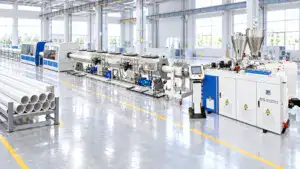
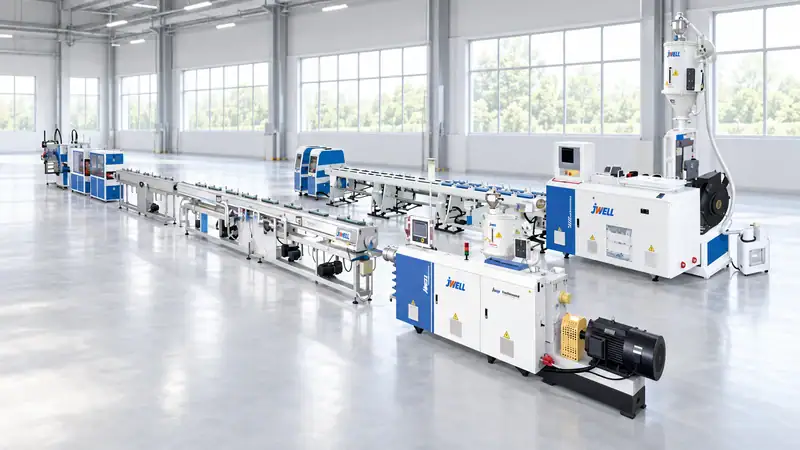
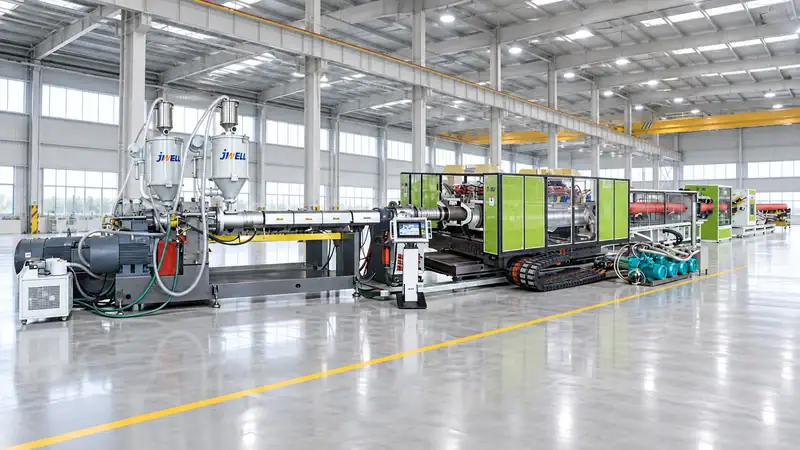
Capacity is limited by the bottleneck. A high-output extruder cannot create more saleable product if the gravimetric feeder, screen changer, die, calibration table, haul-off, cutter, winder, pelletizer, chiller or packing station is undersized. Review the available pipe extrusion line configurations when your product is pipe, and review:
- feeder accuracy and the number of components;
- die pressure and melt filtration area;
- cooling length and heat-removal capacity;
- haul-off traction and maximum line speed;
- online dimensional inspection;
- material conveying, silo and warehouse capacity;
- packaging rate and finished-goods storage.
For a new project, request a mass-balance diagram from the supplier. It should show input resin, additive loss, startup scrap, regrind loop, saleable output and waste disposal. This is more useful than a single headline number.
A practical selection rule
Select 300 kg/h when demand is still being proven and flexibility has high value. Select 500 kg/h when the business needs a dependable commercial platform with room to grow. Select 1,000 kg/h only when the line can be loaded for most scheduled hours and the plant can support its utilities, downstream equipment and maintenance requirements.
Before placing an order, send the supplier your product list, resin grades, target dimensions, annual tonnage, shift pattern and quality standards. Ask for a product-by-product throughput guarantee and a factory acceptance test using representative material. A well-matched 500 kg/h line will normally outperform a poorly loaded 1,000 kg/h line on cost, consistency and return on capital.
For a project-specific recommendation, share your product mix and annual tonnage with Jwell Anhui. The engineering team can match the extruder, die, downstream equipment and utilities to the output you can actually sell.
Need help choosing the right capacity?
Send your annual tonnage, resin grades, product dimensions, shift pattern and target output to the Jwell engineering team. We will recommend a practical 300, 500 or 1,000 kg/h configuration and provide the corresponding layout and utility requirements.
FAQ
Is a 1,000 kg/h line always more energy efficient?
No. It may have a lower specific energy use at high load, but an under-loaded line can waste energy. Compare kWh per saleable kilogram at your expected operating point.
Should I buy extra capacity for future growth?
Yes, but quantify it. A 20–30% headroom allowance is often more practical than doubling capacity without confirmed orders.
Can one extrusion line run every product?
Usually not at the same rate. Resin, die, product geometry and cooling requirements change the guaranteed throughput.
What should a quotation include?
A complete quotation should state throughput conditions, installed power, utilities, footprint, included auxiliaries, commissioning scope, spare parts, training and warranty.