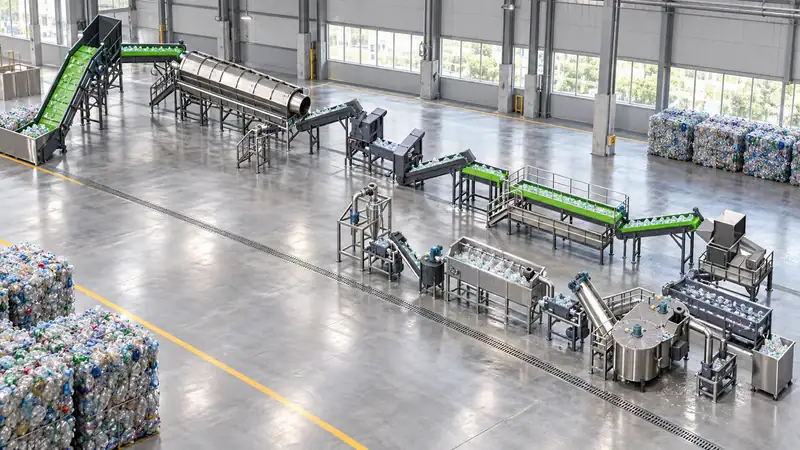
A PET bottle washing and pelletizing line converts baled post-consumer bottles into a stable recycled PET feedstock. The complete route is: bale opening, pre-sorting, label and cap separation, size reduction, hot and cold washing, friction cleaning, rinsing, mechanical drying, thermal drying, extrusion, melt filtration, strand or water-ring pelletizing, and final quality control.
Clean flakes are suitable for some applications; pelletizing adds a controlled melt-processing step for more consistent handling and blending.
1. Bale opening and pre-sorting
The process begins with compressed bottle bales. A bale breaker loosens the material so workers and automated separators can remove contaminants before they reach the grinder. The highest-value sorting decisions happen early: clear PET, light blue PET, colored PET, PVC bottles, metals, paper, stones and organic residue should be separated as far as the product specification requires.
PVC is especially important because even a small amount can discolor PET or degrade during heating. Metal detection and magnetic separation protect knives, screens and the extruder. A project specification should state the expected bale composition, moisture, non-PET percentage and color mix; equipment performance depends on the incoming feed.
2. Label, cap and foreign-material separation
Whole-bottle lines commonly use a combination of manual sorting, air classification, label removal, magnetic separation and optical sorting. Polyolefin caps and rings are valuable by-products, but they must not be treated as PET. Air separators can remove light labels and films, while optical sorters identify color or polymer differences at higher throughput.
The objective is not to remove every label by one machine. It is to create a staged separation system so that each downstream machine receives a more uniform feed. This reduces knife wear, wash-chemical demand and the quantity of off-spec flakes.
3. Crushing and size reduction
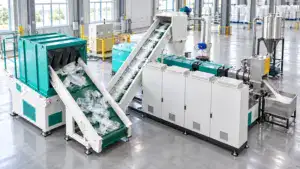
A wet or dry granulator reduces bottles to flakes. Wet granulation can lower dust and start the cleaning process, while dry granulation may simplify water management. Knife geometry, screen size and rotor speed affect flake dimensions and fines generation. Excessive fines increase drying load and can be lost with wastewater; oversized pieces reduce washing efficiency.
Install a metal detector before the granulator and plan an accessible knife-changing area. Knife clearance, rotor balance and screen condition should be included in preventive maintenance because poor cutting quality quickly shows up as unstable bulk density and higher dust.
4. Hot washing and intensive cleaning
Cold friction washing removes loose dirt and residual beverage. Hot washing uses controlled temperature, detergent or alkaline chemistry to loosen adhesives, oils and organic residue. The exact recipe depends on bottle age, label adhesive, contamination and the required intrinsic viscosity or color quality.
Residence time, temperature, chemical concentration and mechanical friction must be controlled together. More heat is not automatically better: aggressive conditions can increase PET hydrolysis if moisture and residence time are poorly managed. A modern line therefore includes temperature control, filtration, water circulation and a defined wastewater treatment strategy.
5. Rinsing, dewatering and drying
After washing, the flakes pass through rinse tanks and friction washers to remove residual chemicals and dirt. Mechanical dewatering removes free water; thermal drying reduces surface moisture to the level required by the next step.
Moisture is a critical quality variable. If wet PET enters an extruder, hydrolysis can reduce molecular weight and lower intrinsic viscosity. Measure moisture after drying rather than relying only on dryer settings. Record moisture by batch and link the result to final pellet quality. Heat recovery from the drying and extrusion system can reduce operating cost, but air balance and dust control must be maintained.
6. Flake quality control
Before pelletizing, inspect flake purity, color, moisture, bulk density, PVC and polyolefin carry-over, metal content and intrinsic viscosity. A basic laboratory plan may include moisture testing, ash or contamination checks, color measurement and IV testing. The right limits depend on the end use: fiber, strapping, sheet, thermoforming or food-contact applications have different requirements.
Do not promise food-contact or bottle-to-bottle compliance merely because the material is called rPET. Those claims require an appropriate decontamination process, traceability, testing and regulatory approvals for the target market.
7. Extrusion, melt filtration and pelletizing
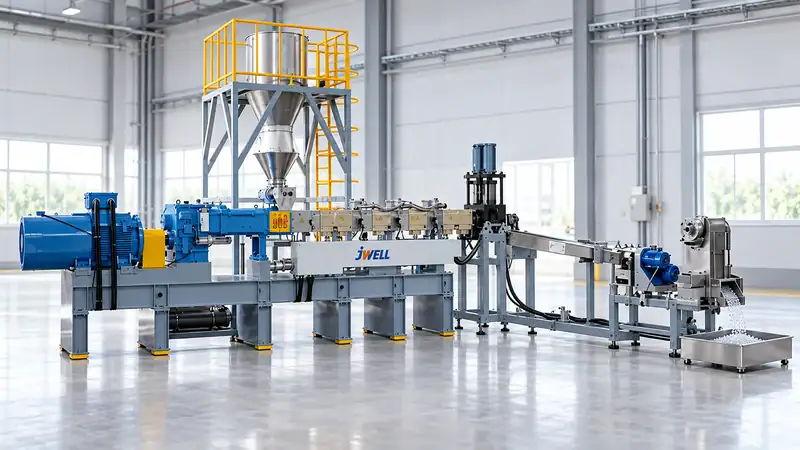
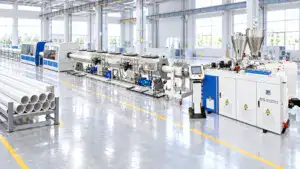
Pelletizing begins with a controlled feeding system. A PET-compatible extruder melts the dried flakes and any approved additives or blend components. Vacuum degassing helps remove moisture and volatile contaminants. A continuous screen changer filters solid particles; filtration area, screen rating and changeover method affect pressure stability and polymer loss.
The melt is then pelletized by strand, water-ring or underwater technology, depending on throughput, pellet specification and automation goals. Pellets are cooled, dried, screened for fines and packed in clean, labeled bags or silos. The pelletizer must be matched to the extruder’s stable output; a mismatch creates surging, wet pellets or excessive fines.
8. The utilities a project must include
A complete PET bottle washing and pelletizing line needs more than the machines listed in a brochure. Budget for electrical power, process water, hot-water generation, compressed air, wastewater treatment, dust collection, ventilation, drainage, resin storage and laboratory equipment.
Review the wider plastic recycling machine range when defining upstream sorting and downstream granulation. Water balance is particularly important. Define fresh-water demand, recirculation rate, sludge removal and discharge limits before finalizing the wash section.
Layout should keep dirty bale handling separate from clean-flake and pellet areas. Provide forklift routes, maintenance clearances, safe chemical storage, noise control and access to screens, knives, filters and dryers. A clean product zone should have its own housekeeping and packaging rules.
9. How to evaluate a supplier
Send representative bales or a detailed feedstock specification and ask for a test report. Compare recovered PET yield, flake moisture, color, PVC removal, water consumption, energy consumption, pellet IV and total waste—not just nominal tonnes per hour. The acceptance test should define feed quality, operating conditions, product limits and the method used to calculate yield.
The most reliable projects treat washing and pelletizing as one process. If the wash section delivers inconsistent moisture or contamination, the extruder cannot compensate indefinitely. Conversely, a well-designed extruder and filtration system cannot rescue a feedstock stream with uncontrolled PVC or excessive fines.
Jwell Anhui can help define the line configuration from bale quality and target flake or pellet specifications through to water, power, layout and commissioning requirements. Request a process flow and a test plan based on representative PET feedstock.
Request a PET recycling line proposal
Share your bottle-bale composition, target throughput, flake or pellet specification and local water-treatment requirements through the Jwell contact page. Jwell can configure the PET bottle washing line around your actual feedstock and end product.
FAQ
Is pelletizing always required?
No. Clean, dry flakes may be sold or used directly in some applications. Pelletizing improves feeding, blending, storage and consistency when the downstream process benefits from a uniform melt-processed feedstock.
What is the biggest risk in a PET washing line?
Variable bale quality. The line should be designed around actual contamination, color mix and moisture, not an idealized feed sample.
How do I protect PET intrinsic viscosity?
Control moisture before extrusion, avoid unnecessary residence time and heat, and verify IV before and after processing.
Can caps and labels be recycled too?
Yes, but they should be separated as polyolefin or mixed-light fractions and handled as distinct products rather than blended into PET.