The geometry of your screw elements determines both how thoroughly additives break apart and how evenly they distribute throughout your material. Different screw designs create different mixing effects. Some focus on breaking down clumps of additives, while others work to spread them uniformly.
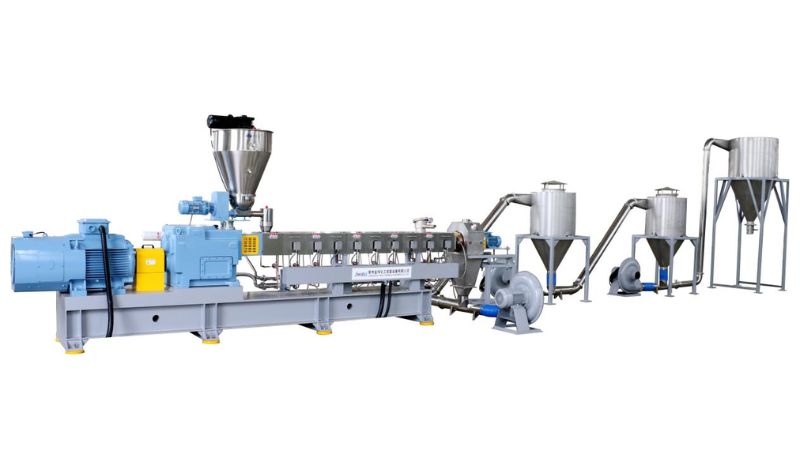
Key Mechanisms of Mixing in Screw Extrusion
Screw extrusion uses two main mixing mechanisms. Dispersive mixing breaks down particles. Distributive mixing spreads them evenly.
Dispersive Mixing and Its Influence
Dispersive mixing applies high shear forces to break apart agglomerated particles in your polymer melt. This mechanism is critical when you’re working with additives that tend to clump together, like pigments or fillers.
The mixing elements in your screw create intense stress that tears apart these clusters. This process determines final melt quality. Poorly dispersed particles cause weak spots and inconsistent properties.
You’ll find dispersive mixing most effective in kneading blocks and other restrictive screw elements. These zones generate the shear forces needed to reduce particle size and improve mixing performance.
Distributive Mixing in Polymer Melts
Distributive mixing moves materials around to create uniform composition throughout your melt. Unlike dispersive mixing, this process uses gentle stretching and folding rather than intense shear.
Your screw design needs elements that split and recombine the melt flow repeatedly. This spreading action ensures additives reach every part of the polymer matrix evenly.
Good distributive mixing prevents streaking and ensures consistent color and properties. Mixing efficiency depends on the number of divisions and redistributions along the extruder.
Mixing Zones and Melt Flow Dynamics
Mixing zones are specific sections in your screw where different elements control melt flow patterns. Each zone serves a distinct purpose in your overall mixing strategy.
Key mixing zone functions:
Melting zone: Converts solid pellets into polymer melt
Mixing zone: Combines dispersive and distributive mixing elements
Metering zone: Homogenizes the final melt before discharge
Your melt flow dynamics change based on screw geometry, rotation speed, and material properties. Proper zone design balances residence time with mixing intensity to achieve optimal mixing quality without degrading your polymer.
Screw Design Features Affecting Additive Dispersion
The geometry and arrangement of screw elements directly control how well additives mix into your polymer melt, with specific zones and components each playing a unique role in achieving uniform distribution.
Screw Configurations and Element Types
Your choice between single-screw and twin-screw extruder affects how additives blend into plastic. Twin-screw extruders offer better mixing. Materials pass between two rotating screws, which creates more shear and movement.
Different screw elements serve specific purposes. Conveying elements move material forward along the barrel. Mixing elements create turbulence and shear to break down additive clumps. The rotation speed of screws changes how much dispersive and distributive mixing occurs.
Kneading Blocks and Mixing Elements
Kneading blocks are critical components that fold and reorient your polymer melt. These elements create high shear forces that break apart agglomerated particles. The angle and stagger of kneading discs determine mixing intensity.
Role of Compression, Feed, and Metering Zones
Your screw divides into three main zones. The feed zone accepts raw materials. The compression zone reduces air pockets and melts the polymer. The metering zone controls throughput and final melt quality.
Screw Design for Filled and Reinforced Polymers
Materials with glass fibers or mineral fillers need specialized screw configurations. You need gentle processing to prevent fiber breakage while still achieving good fibre dispersion.
Process Optimization Through Simulation and Quality Control
Simulation tools help you predict screw design performance before building. Quality measurements show how well your system mixes additives and holds temperatures steady.
Numerical Simulation in Screw Design
Numerical simulations let you test different screw designs on computer before spending money on physical prototypes. These programs show you how plastic flows through the screw channels and where hot or cold spots might form.
You can use simulation to compare multiple screw geometries quickly. The software calculates mixing efficiency and predicts thermal patterns in the melt. This helps you spot problems like incomplete melting or poor additive distribution early in the design process.
Measuring and Enhancing Mixing Quality
Track additives spreading and temperature uniformity. Better mixing performance means more consistent parts with reliable properties.
Testing methods include checking melt samples for additive concentration and measuring temperature variations. When you find weak spots, you can adjust screw features like flight depth or add mixing elements.
Thermal Conductivity and Melt Consistency
Good thermal conductivity in your screw helps even out temperature differences in the melting plastic. Hot spots can degrade materials while cold spots leave unmelted chunks.
You want melt quality that stays consistent from start to finish. Monitor barrel temperatures and adjust heating zones based on what your simulation predicted versus actual results.
Advancements in Extrusion-Based 3D Printing
Recent innovations in screw extrusion systems are improving how materials mix and bond during printing, while new screw designs are boosting throughput and material quality.
Screw Extrusion 3D Printing Systems
Screw extrusion 3D printing lets you use granulated plastic instead of filament. This approach gives you more material options and lowers your costs.
The system feeds pellets into a heated barrel. A rotating screw melts and pushes the material through a nozzle. You get better control over temperature and pressure compared to traditional methods.
Twin-screw extruders offer even more benefits. They provide better mixing and can handle composite materials with reinforcing fibres. The two screws working together create a more uniform melt, which helps your printed parts come out stronger and more consistent.
Optimizing Fibre Dispersion and Interlayer Bonding
Good mixing in the mixing zone is key for parts with added fibres. New screw designs help spread fibres evenly throughout your material.
Better fibre dispersion means stronger parts. Good fibre distribution improves mechanical properties in all directions.
Layer bonding also improves with optimized screw systems. The consistent temperature and pressure help each layer stick better to the one below it.
Trends in Additive Manufacturing with Screws
Manufacturers are developing specialized screw geometries for specific materials. These designs focus on improving throughput without sacrificing quality.
Ultrasonic assistance is emerging as a way to reduce clogging and improve material flow.
You’ll also see more systems that can switch between different materials quickly, making multi-material printing more practical for production environments.
Ready to Upgrade Your Extrusion Line?
Jwellanhui engineers precision-built single-screw and twin-screw extrusion systems — optimized for superior additive dispersion, consistent melt quality, and maximum throughput. Trusted by global manufacturers across pipe, sheet, board, profile, and recycling applications. Contact us today for extrusion solutions.
Frequently Asked Questions
How does the choice of screw geometry influence how evenly additives spread throughout the melt?
Screw geometry controls shear and flow. Tighter clearances break clusters with high shear. Wider channels spread additives gently. Flight spacing and angle affect material movement and residence time, which changes how many times additives pass through mixing zones.
Which screw elements are best for improving mixing without causing excessive heat or degradation?
Distributive mixing elements spread additives with little heat. They split and recombine melt gently. Kneading blocks at neutral or slight forward angles give moderate mixing, which balances dispersion and heat. Avoid aggressive reverse elements for heat-sensitive additives.
How do screw speed and throughput settings affect additive distribution consistency?
Higher screw speed increases shear and melt temperature. Balance speed with cooling capacity. Lower throughput increases residence time, giving additives more time to mix thoroughly.