For medical and industrial tubing manufacturers, the choice between PVC extrusion and PO extrusion affects product performance, regulatory fit, processing stability, equipment configuration, and long-term production cost.
In practical terms, PVC and PO each offer strong advantages—but they solve different problems. The better option depends on your tubing priority.
Core Differences Between PVC and PO Extrusion
Before comparing applications, it helps to define what “PO” means in extrusion. In most tubing discussions, PO refers to polyolefins, especially PE and PP. In extrusion processing, PVC and PO behave very differently. Reference industry guidance notes that PVC is typically processed in dry blend form on double-screw extruders, while PO materials are generally processed in granular form on single-screw extruders.
PVC Extrusion: Strength, Stability, and Process Efficiency
PVC is widely used in tubing because it offers a strong balance of stiffness, dimensional consistency, and formulation flexibility. It can be compounded to produce rigid or flexible tubing. This is one reason it remains common in many medical and industrial product categories.
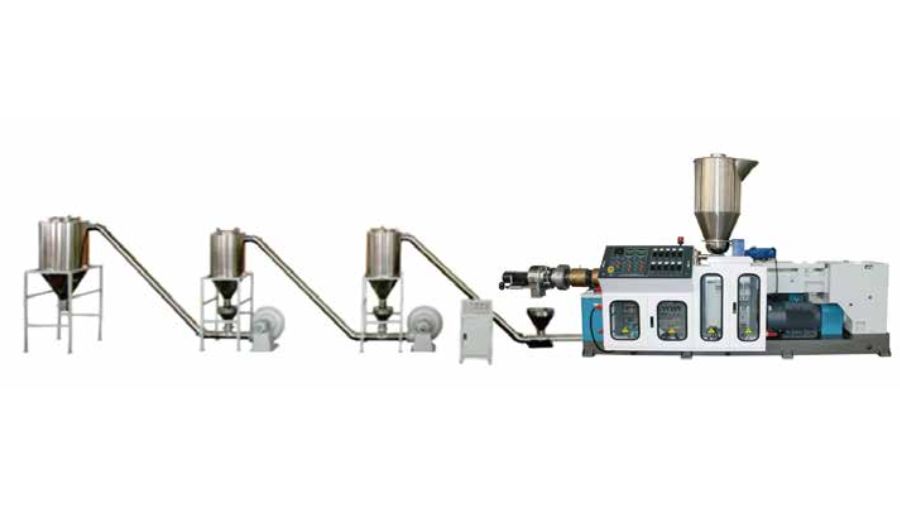
From a processing standpoint, PVC generally requires less heat input than PO, and industry references note that PO may need around three times more heat input than PVC during extrusion. That matters for manufacturers evaluating energy consumption, melt control, and line efficiency. PVC also tends to have lower volumetric shrinkage, which can support tighter dimensional control in finished tubing.
PO Extrusion: Toughness, Flexibility, and Broad Chemical Performance
PO materials such as PE and PP are often chosen when the application demands higher impact resistance, better low-temperature toughness, or broader flexibility in aggressive chemical environments. In many industrial tubing systems, PO is attractive because it is lightweight, durable, and well suited to applications where bending, repeated movement, or impact loading is expected.
However, PO behaves differently in cooling and downstream control. According to the reference article, PO extrusion involves processing a true melt that crystallizes on cooling, while PVC behaves differently under extrusion conditions and forms a different internal structure. That distinction affects die design, calibration, cooling strategy, and final tubing consistency.
Side-by-Side Comparison for Tubing Manufacturers
| Selection Factor | PVC Extrusion | PO Extrusion |
| Typical material form | Dry blend | Granules/pellets |
| Common extruder type | Double-screw | Single-screw |
| Relative stiffness | Higher | Lower |
| Relative impact resistance | Lower | Higher |
| Relative creep resistance | Better | Lower |
| Relative diffusion/permeability | Lower | Higher |
| Shrinkage | Lower | Higher |
| Energy demand in processing | Lower | Higher |
| Common tubing advantage | Dimensional stability, clarity/formulation flexibility | Toughness, flexibility, chemical durability |
This general comparison aligns with published extrusion guidance. It shows that PVC is typically 2–3 times stronger and stiffer than PO, while PO usually offers better impact resistance and higher creep and diffusion characteristics.
How Material Choice Affects Medical and Industrial Tubing Performance
The best material is the one that fits the application environment, compliance needs, and downstream converting requirements.
Medical Tubing: When PVC Still Makes Sense
PVC remains an important option in medical tubing because it can be formulated for softness, transparency, kink resistance, and process consistency. It is often considered where manufacturers need clear tubing for fluid visibility, dependable wall thickness control, and economical high-volume production.
For OEMs and converters, PVC can be especially useful when the design requires:
- Good visual monitoring of fluids
- Stable extrusion over long runs
- Reliable dimensional tolerance
- Cost-effective disposable tubing production
That said, medical material selection cannot be based on processability alone. Teams also need to assess plasticizer strategy, sterilization method, extractables expectations, and regional regulatory preferences. In some projects, PO or TPE-based alternatives may be preferred for “PVC-free” product positioning.
Medical Tubing: When PO May Be the Better Fit
PO materials are often selected for medical tubing when the design brief prioritizes cleaner material perception, good chemical resistance, or compatibility with specific sterilization and formulation requirements. PE and PP can also be attractive where softness is not the primary goal, or where the manufacturer wants to avoid PVC-related formulation complexity.
PO may be the stronger choice when:
- The brand requires PVC-free messaging
- Tubing needs strong chemical resistance
- Impact toughness matters in handling and transport
- Material simplicity is valued in the supply chain
Still, PO extrusion typically demands careful control of cooling, shrinkage, and dimensional stability, especially for precision tubing.
Industrial Tubing: Matching Material to Service Conditions
Industrial tubing decisions are usually more performance-driven than appearance-driven. Here, the material question often comes down to pressure, temperature, chemical exposure, flexibility, and long-term deformation.
PVC is often favored for industrial uses requiring:
- Better rigidity
- Lower permeability
- Stable dimensions
- Lower creep under load
The reference article specifically notes that PVC shows lower diffusion through the wall and lower creep than PO. It is important in demanding service environments. By contrast, PO is often preferred where tubing may experience impact, repeated flexing, or harsher mechanical handling.
Extrusion Line Considerations Before You Finalize Material Selection
Material choice should never be separated from equipment planning. A tubing product may look good on paper but still underperform if the extrusion line is not optimized for that resin family.
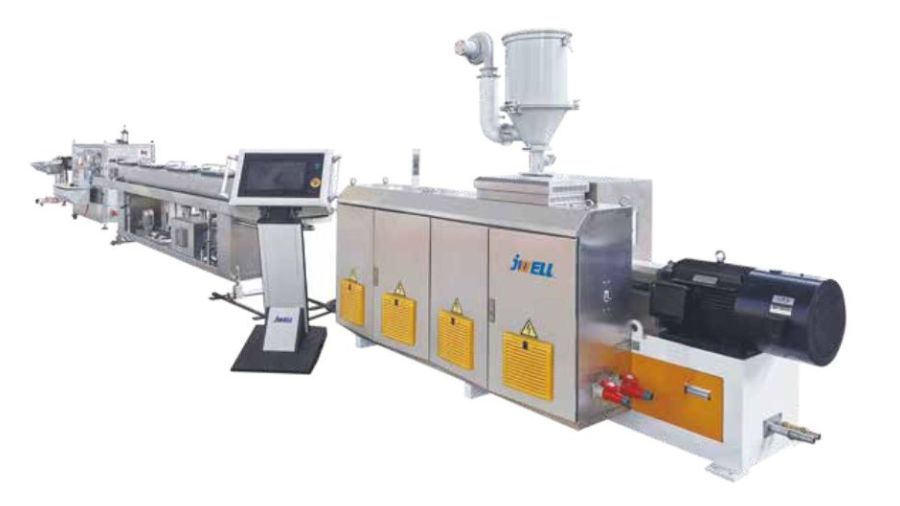
Extruder Configuration and Throughput Planning
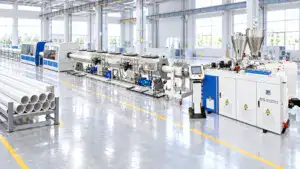
PVC and PO often call for different processing architectures. Industry references state that PVC is usually associated with double-screw extrusion, while PO is more commonly run on single-screw systems. For manufacturers expanding into new tubing categories, that means a material switch may also imply changes in screw design, feeding behavior, heating profile, tooling, and downstream calibration.
Process Stability, Scrap Rate, and Quality Control
If you need high-volume tubing with tight tolerances, low scrap rates, and repeatable output, process stability may outweigh raw material price differences.
A simple decision chart can help:
| Priority | Better Fit Tends to Be |
| High stiffness and dimensional control | PVC |
| Higher impact toughness | PO |
| Lower permeability | PVC |
| Greater flexibility in rough handling | PO |
| Lower processing energy demand | PVC |
| PVC-free product positioning | PO |
A Practical Selection Rule
If your project is driven by precision, stiffness, dimensional stability, and lower permeability, start by evaluating PVC. If it is driven by impact resistance, flexibility, and PVC-free positioning, start by evaluating PO. Then validate the choice against your regulatory requirements, downstream equipment capability, and total production economics.
Partner with Jwell for the Right Extrusion Solution
For medical and industrial tubing manufacturers, the best results come from matching the right resin with the right extrusion technology, tooling design, and process support.
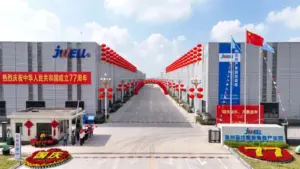
At Jwell, we help manufacturers build extrusion solutions tailored to their product goals. From material-specific line configuration to stable output and scalable production planning, our team works with you to improve performance from concept to commercialization. Contact us to discuss a solution customized for your material, output, and application requirements.
Frequently Asked Questions
What is the main processing difference between PVC and PO extrusion?
PVC is typically processed in dry blend form using double-screw extruders, while PO materials such as PE and PP are usually processed as granules on single-screw extruders.
Is PVC or PO better for medical tubing?
Neither is universally better. PVC is often chosen for clear, flexible, cost-effective tubing with good dimensional control, while PO may be preferred for PVC-free products, chemical resistance, or specific regulatory and sterilization needs.
Which material has better dimensional stability in extrusion?
In general, PVC offers lower shrinkage and higher stiffness, which often supports better dimensional stability in tubing extrusion.
Which material is tougher under impact?
PO generally has better impact resistance than PVC, making it attractive for tubing exposed to rough handling or repeated mechanical stress.
Does material selection affect extrusion line design?
Yes. Screw configuration, feeding, temperature profile, cooling, calibration, and downstream control can all change depending on whether the line is designed for PVC or PO extrusion.
How should tubing manufacturers make the final choice?
Use a three-part filter:
- Application performance requirements
- Regulatory/compliance needs
- Extrusion line compatibility and production economics